Automatic drain and refill
AED 430 to 905
- Accessible fluid drain and refill
- Specified drain-plug seal
- Temperature-based level setting
Correct fluid · defined method · verified level
Book gearbox oil service in Dubai with the correct fluid, filter and level procedure. Tell us the vehicle model and whether you need scheduled service or have a gearbox concern. We will inspect the car and provide a written estimate before paid work begins.

Service prices
All displayed AED ranges are before VAT. The written quote adds 5% VAT to the agreed service price. These guide estimates cover the listed fluid service for a suitable gearbox, not fault diagnosis or repairs. Fluid approval, quantity, filter or pan design, access and vehicle condition change the written total.
AED 430 to 905
AED 810 to 1,570
AED 715 to 1,380
AED 475 to 950
AED 335 to 715
AED 335 to 855 per unit
The ranges cover fluid, stated parts, labor and the required level and leak checks. Fault testing and repairs are priced separately. Timing depends on gearbox access and parts availability.
Fluid and parts
We match the exact fluid approval to the installed transmission instead of using color or viscosity alone. Different automatic, CVT, dual-clutch and manual units require different friction and additive properties.
Service method
The installed gearbox and manufacturer procedure determine the method. A routine drain, a filter-pan service and an approved exchange replace different amounts of fluid.
| Method | What changes | Decision before work |
|---|---|---|
| Drain and refill | Removes the accessible fluid; correct approval and level procedure matter. | Used when the gearbox procedure calls for it and the unit is suitable for service. |
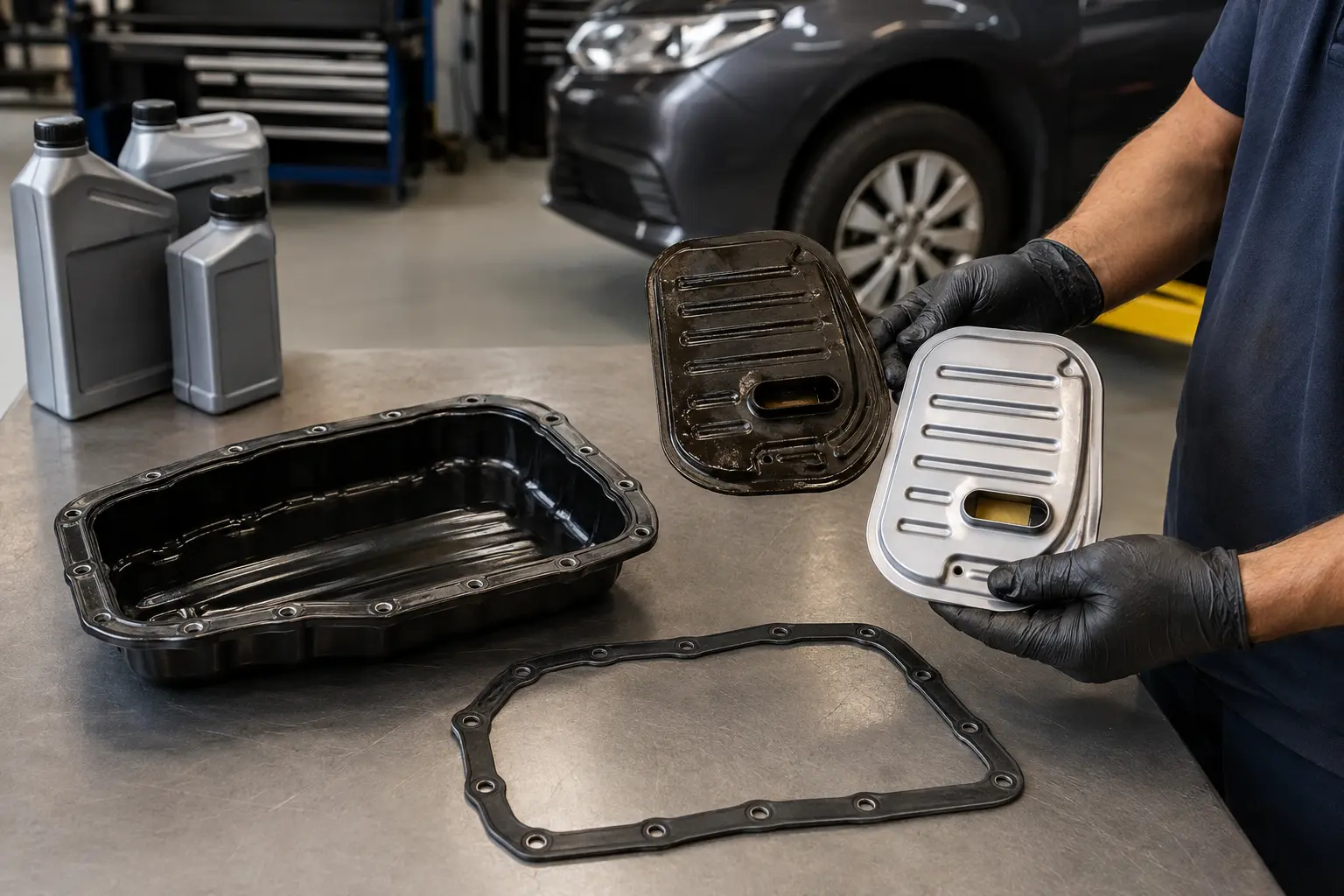
| Pan and filter service | Replaces the specified filter or integrated pan, seals and accessible fluid; residue can be inspected. | We check the exact parts and pause if debris suggests internal damage. |
| Approved exchange | Replaces more fluid using a method allowed for the identified unit. | Quoted individually after reviewing condition and service history; no universal pressure flush. |
Send the make, model and whether you need scheduled fluid service or have a symptom. That is enough to start.
Condition checks
The free initial check reviews your concern and visible leaks. During an approved service we also inspect removed fluid and accessible residue. A scan, extended road test or pressure test for an existing shift fault is quoted separately.
If we find heavy debris or metal, we pause the service and explain the next diagnostic step.
Service or diagnosis
A scheduled oil service is for a gearbox that is operating normally. Existing shift complaints need a different first step.
Suitable when the gearbox shifts normally and is due for scheduled maintenance.
Slipping, delayed engagement, shudder or a leak needs diagnosis first. Fresh fluid cannot fix worn clutches or control faults. See our transmission repair options.
Loss of drive, unpredictable gear selection, a major leak or overheating may require recovery. Tell us what happened and where the car is before moving it.
Your visit
The model and whether you need maintenance or have a symptom are enough to start.
We confirm the gearbox and look for leaks or signs that diagnosis should come first.
See the agreed fluid, parts and method with the final price including 5% VAT.
We change the specified fluid and parts, set the level correctly, then check for leaks and basic engagement.
Service timing
We check the maintenance schedule for the exact gearbox, model year and operating conditions because there is no single interval for every automatic, CVT, DCT or manual transmission.
Before booking
Estimated prices before VAT range from AED 335 to 715 for many manual gearbox oil services to AED 810 to 1,570 for an automatic filter and pan service. The exact transmission, fluid, parts and condition determine the written total. Fault diagnosis is separate unless your quote includes it.
Use the schedule and service information for the exact vehicle and transmission. There is no single interval suitable for every automatic, CVT, DCT or manual gearbox.
ATF is used by many automatic transmissions, while CVTs, dual-clutch systems and manual gearboxes may require different fluids. The required specification matters more than a generic name.
That depends on the design and service procedure. Some units have a separate filter, some use an integrated filter pan and others have a different service arrangement.
No. The method should be selected for the exact unit, service history and condition. A drain and refill, pan service or approved exchange can each be appropriate in different circumstances.
Fresh correct fluid may restore proper maintenance condition, but it cannot be promised to repair worn clutches, hydraulic leakage, damaged bearings, solenoids, wiring or control faults.
The gearbox should first be identified and inspected. Current symptoms, leaks, diagnostic information and fluid condition help define whether maintenance or further diagnosis is the responsible next step.
Book gearbox service
Send the vehicle model and whether you need scheduled gearbox oil service or have a leak, warning, judder, delayed engagement or shift concern.