Engine, cooling and AC
Overheating, coolant loss, weak cooling, rough running and loss of power. The first checks depend on when the symptom appears and whether the vehicle is safe to start.
Imported vehicle identity and fault assessment
Need Luxgen repair in Dubai? We assess engine, cooling, AC, transmission, electrical, brake and suspension concerns at our Al Quoz 4 workshop. Send the model, year and symptom to confirm the first check. A basic workshop inspection is free; targeted diagnostics and repairs are quoted before work begins. For an n7 electric vehicle, we confirm the exact service capability before accepting the job.

Choose the right first check
Tell us what the car is doing. We confirm the exact model and available information, then explain the test or service that fits the complaint.
Overheating, coolant loss, weak cooling, rough running and loss of power. The first checks depend on when the symptom appears and whether the vehicle is safe to start.
Slow crank, warning lights, camera and display faults. We separate 12-volt supply, wiring and communication problems before a module or screen is proposed.
Grinding, pulling, vibration or delayed shifts. We check the affected system and explain repair choices before ordering parts.
Oil, filters, fluids and wear items are selected against the model, VIN and installed specification. Part availability and fitment are checked before approval.
Luxgen n7: Send the charging or drive warning first. High-voltage diagnosis, isolation and repairs require a separate capability and safety check for the exact vehicle and operation.
U6, URX, n7 and earlier models
Luxgen vehicles found in Dubai can come from different markets and periods. A U6 NEO, URX NEO or n7 does not share one service path, and an older U7, M7, S5 or U5 may need parts and technical information sourced against its original market.
Luxgen models owners may bring include the U6 NEO, URX NEO and battery-electric n7. These names help orientation, but they do not establish the exact equipment in a UAE vehicle. Send the registration card and a clear dashboard photograph.
For an n7, include the charging connector, warning and whether the car can enter drive. We confirm the available service scope before the visit.
Older U6, U7, M7, S5 and U5 vehicles can differ in engine, turbocharging, transmission, electronics and trim. Record the engine label and any previous parts invoice where available.
The model name alone may select the wrong filter, sensor, belt or brake component.
Mention the source market, previous repairs and modified wiring or equipment. We assess the vehicle as it is now.
Start with what the car does
One warning can have several causes. Tell us when it happens and what changed. The first checks then narrow the repair before a part is quoted.
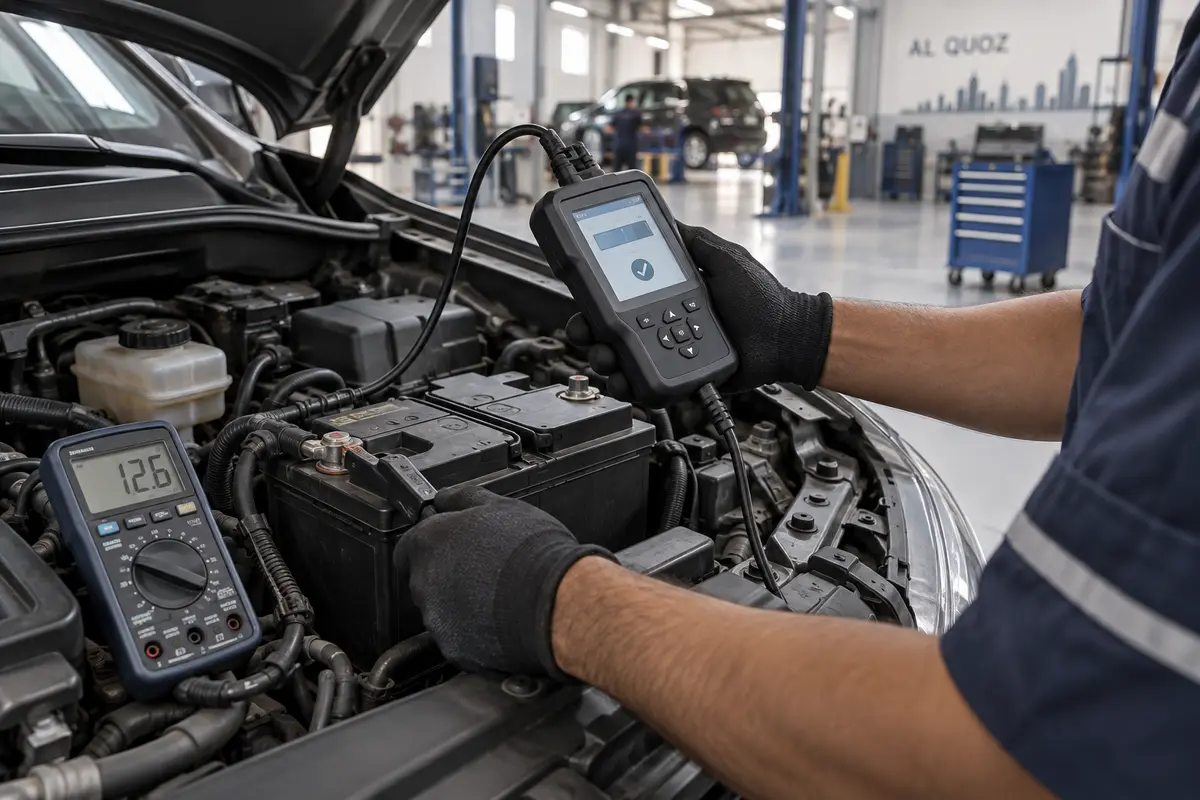
Keep the first warning. Photograph it before a restart or scan clears useful context.
Tell us: Last successful start and any jump start. First checks: Battery, cables, charging and starter control.
Tell us: Warning photo and when power drops. First checks: Fault context, live values, air, fuel, boost and temperature.
Tell us: Gear, temperature and delay. First checks: Fluid evidence, controls, mounts and driveline.
Tell us: Which function stopped and any recent glass or body work. First checks: Supply, connectors and communication.
Stop driving if temperature stays high or coolant escapes. Share when it happens. A pressure test and fan check help locate the fault.
Before traveling to Al Quoz 4
A warning that disappears after restarting still needs attention. Use the active symptom to choose how the car reaches the workshop.
The engine starts normally, fluids stay contained, brakes and steering work normally, and there is no severe temperature or oil-pressure warning, smoke, burning smell or electrical heat.
Photograph the original warning. Call before setting off if you are unsure.
Tell the recovery provider if the car rolls, steers, selects neutral or has a locked wheel.
Call before moving the carIndicative costs before VAT
These indicative Dubai ranges exclude 5% VAT. The written estimate depends on the model, confirmed work, parts source, access and vehicle condition.
| Service | Estimated total | Typical inclusion | Main price variables |
|---|---|---|---|
| Diagnostic assessment | AED 180 to 450 | Complaint review, scan and targeted checks | Systems involved and test time |
| Minor service | AED 450 to 850 | Suitable oil, filter, labor and inspection | Engine, oil quantity and filter choice |
| Cooling repair | AED 700 to 2,800 | Confirmed component repair and testing | Hose, thermostat, radiator, fan or pump |
| AC repair | AED 500 to 3,200 | Testing and approved repair | Leak, compressor, condenser or controls |
| Suspension repair | AED 750 to 3,800 | Approved worn-part replacement and checks | Bushes, joints, dampers and alignment |
| Transmission repair | AED 2,000 to 8,500 | Repair matched to the confirmed condition | Control, valve body or internal damage |
A basic workshop inspection is free in Al Quoz 4. The diagnostic range pays for the agreed complaint review, scan and targeted checks; confirm the test time before work starts. The ranges exclude 5% VAT. Further testing, dismantling, special-order parts, fluids, programming, calibration and recovery may cost extra when the job requires them. We explain those items and seek approval before additional paid work.
Send the model and problem for a more useful estimated range.
Request an estimated priceVisible fault, several possible causes
A blank screen or missing camera view can start with voltage, wiring, a network connection or work done near the affected area. Replacing the display first may miss the fault.
Record battery and charging condition, voltage drop and any jump start or battery disconnection before the warnings appeared.
Identify which modules communicate. Inspect connectors, shared feeds and work near the windscreen, bumper, mirror or dashboard.
Check mounting and wiring before calibration or programming. Record the original configuration and confirm model-specific support first.
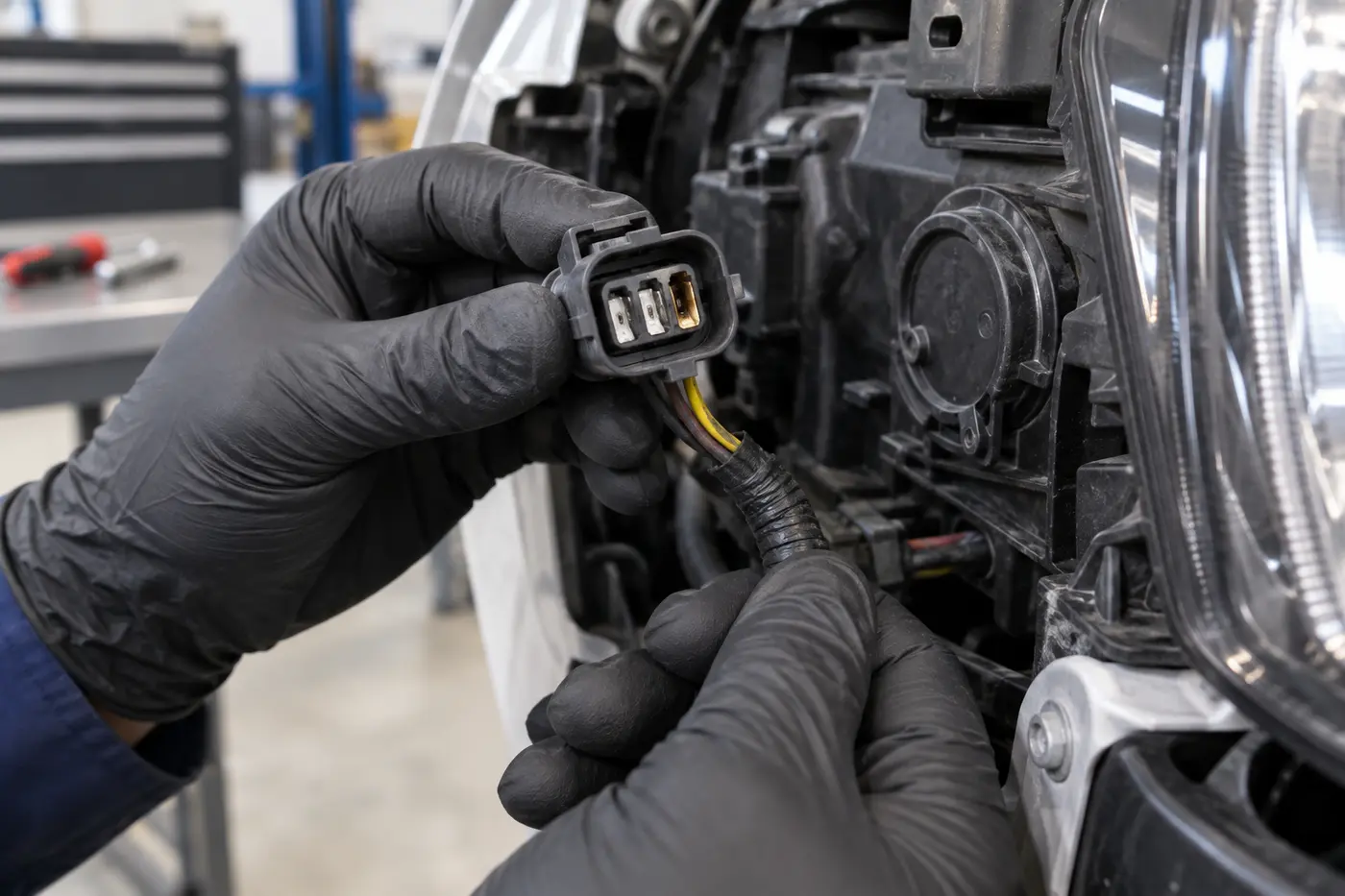
For starting or intermittent electrical problems, see how electrical diagnosis checks supply and communication before a module is replaced.
Petrol and turbo evidence
A rough idle, smoke or loss of power can cross several systems. Replacing ignition or boost parts from one code can leave the real cause unchanged.
Record whether the change is cold, hot or load-dependent. Compare cylinder information with ignition, fuel delivery, air leaks, compression and timing evidence. Keep removed spark plugs identified by cylinder if they form part of the diagnosis.
Inspect air paths, hoses, control operation, boost data, exhaust restriction and mechanical condition. Note oil consumption, smoke colour, noise and whether reduced power follows sustained acceleration.
Clean only after the first evidence is photographed. Identify the highest wet point, oil specification, level history and whether smoke or pressure symptoms accompany the leak.
Use cold pressure, temperature comparison, fan operation and combustion evidence where relevant. A repeated top-up is maintenance only after the loss path is understood.
If compression, oil pressure, leakage or internal noise establishes a mechanical case, the engine repair process describes how measured evidence should define any disassembly.
The n7 changes the safety boundary
The Luxgen n7 is a battery-electric vehicle. A booking must distinguish the 12-volt system that wakes the car, the charging input, the high-voltage battery, power electronics, drive unit and thermal management.
State the charger type, connector, starting state of charge, ambient condition and exact point where charging stops. Photograph the charger and vehicle messages. Report whether another compatible charger was tried safely.
A failure at one location may involve the external supply, cable or charger. A failure at several known-good locations shifts the test plan toward the vehicle.
Do not open orange-cable areas or touch a collision-damaged battery zone. Heat, odour, smoke, water entry, underbody impact or an isolation warning requires a controlled safety decision before transport.
The workshop should confirm diagnostic coverage, isolation procedure, lifting information and the exact operation before the car arrives.
Maintenance follows the installed application
A useful Luxgen service begins with model year, powertrain, mileage, operating history and previous materials. Petrol and electric vehicles do not share one maintenance list.
Imported specification matters
The model badge alone may not identify the right component. Confirm the application before paying for a special-order part or dismantling the car.
A clear record for the next decision
Know what was checked, what remains uncertain and what you are approving before repair work begins.
Before approval
After approved work
The handover should name the fitted part or material, the work performed and the relevant verification. If a concern remains, it should have a clear next check.
Understand the written figure
The same warning may lead to a connector repair, a mechanical check or an imported component. The first estimate should define the diagnostic work it buys.
Test time and access
Agree on the included checks and any extra dismantling before it starts.
Part source and fitment
Confirm supplier stock, deposits, return terms and delivery time.
Follow-up testing
An intermittent fault may need a later cold or hot check with a separately agreed cost.
Before you approve
Check labor, parts, fluids, seals, programming, calibration, road testing and any outside support. Ask what is excluded and whether 5% VAT is included in the written total.
A part should not be approved only because an intermittent symptom did not appear during one visit.
A useful first visit with missing records
Begin with what can be verified on the vehicle. A missing invoice does not prove a fluid, filter or control unit has never been changed.
Send any invoice, warning photo, VIN image and fitted part label you can access safely.
Prioritize braking, steering, leaks, temperature and no-start concerns. Check service items against their current condition.
Agree on maintenance using verified specifications. The baseline report should separate facts, observations and unknowns.
Three realistic quotations
These are illustrative estimates, not completed customer jobs or fixed quotes. Amounts exclude 5% VAT. Parts availability, hidden damage and the approved scope can change the final price.
Work: Pressure test, leaking thermostat housing replacement, suitable coolant, bleeding and final temperature check.
Condition: Assumes the housing is confirmed as the leak source and there is no radiator or engine damage. VAT extra.
Work: Front pads and discs, installation, caliper inspection and road verification.
Condition: Assumes the calipers remain serviceable and the quoted parts fit. VAT extra.
Work: Scan, battery and charging checks, accessible wiring review and written repair recommendation.
Condition: Parts and further dismantling are separate. VAT extra.
Visit the workshop
Our independent garage is in Al Quoz 4, Dubai. Share your Luxgen model, symptom and location before traveling. If the vehicle is unsafe to drive, call to discuss recovery. Pickup and delivery can be arranged for approved jobs, subject to availability and the vehicle’s condition.
Before you book
Bookings can be reviewed for U6, URX and eligible earlier vehicles after the exact model, year, VIN, market, powertrain and requested operation are confirmed. An n7 EV needs a separate high-voltage capability check.
Send the registration card, VIN, model, year, mileage, warning photographs, source market, service history and a description of when the symptom occurs.
No. A code records an observed condition. Voltage, wiring, communications, live values and physical or mechanical checks are used to confirm the cause.
A photograph helps locate the part. Final selection should use the VIN, installed reference, build information and measured specification because market applications vary.
An assessment can separate supply, communication, display, camera, connector and recent body or windscreen work. Programming and calibration depend on the exact vehicle and available information.
Stop if the temperature remains abnormal, coolant is escaping, steam appears or the engine changes sound. Share the warning and vehicle condition so recovery can be planned.
A basic workshop inspection is free. Paid diagnostic assessment is estimated at AED 180 to 450 plus 5% VAT for the agreed complaint review, scan and targeted checks. Ask which tests and how much time are included before authorizing it. Further dismantling or specialist tests are quoted separately.
Timing depends on the VIN match, supplier stock and whether a part must be ordered from another market. Ask for the confirmed part reference, expected delivery and return terms in the written quote before leaving the car for repair.
Prepare the Luxgen visit
Share the VIN, mileage, warning image and recent work. Tell us if the car may need recovery.
Start with the right check.
We will confirm the visit scope and explain any paid diagnosis before work begins.