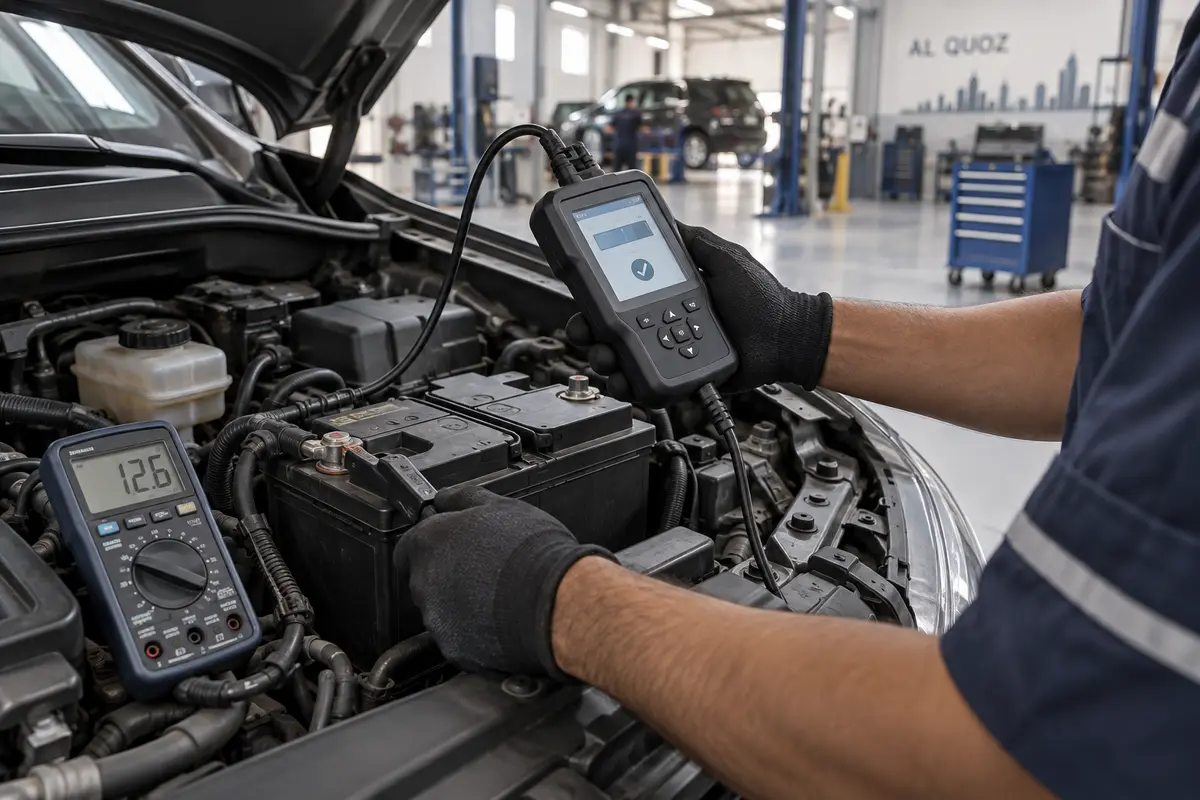
Independent Hongqi workshop in Dubai

Hongqi repair Dubai

Arrange Hongqi repair in Dubai for petrol or electric vehicles with engine, transmission, drive-ready, charging, cooling, AC, suspension, brake, steering, electrical, body-control or driver-assistance concerns. The VIN, powertrain and exact symptom set the assessment scope.

Blue Hongqi vehicle prepared for a diagnostic assessment in Dubai
Comfort, chassis and propulsion complaints are separated before parts are selected.
Confirm the modelVIN, year, trim and market
Name the energy typePetrol or electric
Describe the whole eventWarnings, sounds and conditions
Approve in stagesEvidence before replacement

A complete complaint is more useful

Describe every Hongqi symptom that appears at the same time

A ride-height message, a hard steering feel and several electrical warnings may share a supply or communication condition. Treating each display line as a separate failed part can create unnecessary work.

Build a timeline from normal operation to the fault

Record whether the vehicle was cold or warm, parked for a long period, charging, idling, moving or travelling over an uneven road. Include the selected gear or mode, road speed, AC demand, recent impact and the exact order in which warnings appeared.

Note what restored operation. A restart, jump start, temperature change or longer drive is evidence, not proof of a defective battery or module. Avoid clearing codes or disconnecting the battery immediately before assessment unless safety information requires it.

If the concern is noise, say where it is heard and whether it changes with engine speed, vehicle speed, steering input, braking, body movement or cabin fan setting. A short passenger-recorded video can preserve an intermittent condition.

Send the VIN and registration cardModel names and trim descriptions do not establish every installed system.
Photograph every warning pageOne cropped message can hide related energy, chassis or network information.
List recent workBattery, tyre, glass, body, alignment and software events can change the starting check.
State whether driving is safeReport loss of braking, steering, ride control, fluid, charging or drive-ready state before arrival.

Model identity and equipment

Hongqi sedans, SUVs and electric vehicles need different references

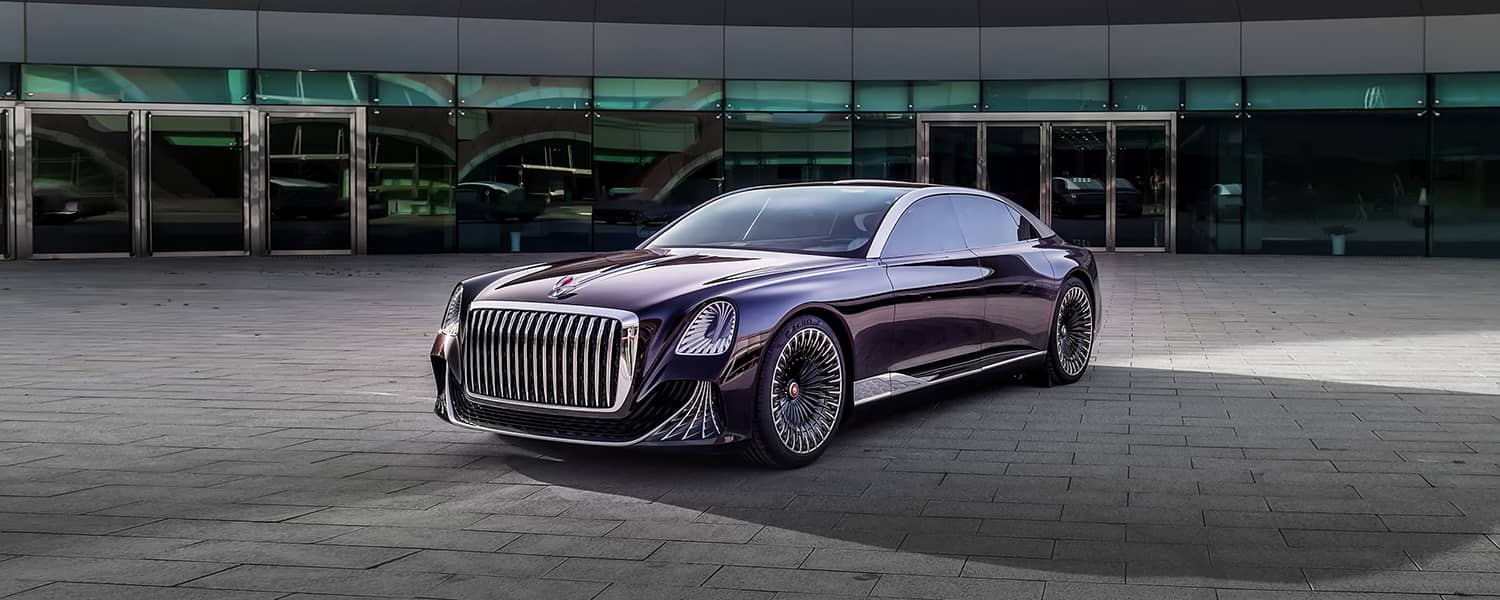
Hongqi model examples on UAE roads include H5 or Ousado, H9, HS5, HS7 and E-HS9. Global model material also contains other names. The exact UAE or import application must be established from the VIN and fitted equipment.

Send the full badge, year, VIN, source market, odometer reading and powertrain. If a component has already been replaced, include the invoice and any readable part number. For imported vehicles, account region, language, navigation, online services and security access can affect what can be configured after a repair.

Equipment should be verified rather than assumed. Air suspension, powered comfort functions, cameras, radar, multiple-zone climate control and other features may be fitted only to particular versions. The estimate should refer to the installed vehicle, not a brochure for another trim.

Separate the propulsion domain

Petrol Hongqi and E-HS9 concerns follow different paths

The first safety checks and available diagnostic scope depend on whether the vehicle has a combustion engine or high-voltage electric propulsion.

Petrol vehicle assessment

Starting trouble, rough running, reduced power, smoke, boost response or a warning can involve electrical supply, air, fuel, ignition, engine management, cooling, exhaust systems or mechanical condition. A scan directs testing but does not prove an injector, turbocharger, sensor or internal failure.

  • Record cold and warm behaviour separately.
  • State fuel level and recent refuelling.
  • Note smoke colour, smell and visible fluid.
  • Explain whether power returns after restarting.

For a major engine concern, the engine repair guide explains the role of pressure, temperature, compression and leakage evidence.

Electric vehicle assessment

An E-HS9 drive-ready, charging, reduced-power or temperature complaint can involve the 12-volt supply, high-voltage system, charging interface, thermal management, control network or external supply. Confirm high-voltage safety and data access before deeper work.

  • Share state of charge and exact messages.
  • Report collision, water or underside impact.
  • Record charger type and session behaviour.
  • Do not touch orange high-voltage parts.

A charging failure does not by itself prove battery or onboard-charger failure. Cable, supply, inlet, communication and temperature evidence belongs in the same session record.

Comfort is produced by several systems

Find which Hongqi system changed before promising a luxury-function repair

A comfortable ride, quiet cabin and powered features depend on mechanical condition, electrical supply, communication and configuration working together.

Ride and body movement

For harshness, leaning, low height or a suspension message, record whether the vehicle settles while parked, changes after starting or reacts differently by mode. Tyres, springs or air components where fitted, dampers, sensors, wiring and control conditions can create different patterns.

Noise and vibration

State whether the sound follows road speed, engine speed, steering, braking, fan speed or body movement. Tyres, wheels, bearings, mounts, driveline and trim are not separated by the word vibration alone.

Cabin temperature and airflow

Describe each zone, vent temperature, airflow strength, smell and whether cooling changes at idle, speed or while charging. The car AC assessment separates airflow, refrigerant, compressor control, sensors and electrical supply.

Seats, doors and convenience functions

Identify the exact function, switch, door or seat position and whether it fails after sleep, unlocking or movement. Power, grounds, modules, networks, switches and mechanical resistance may all need inspection.

Displays and multiple warnings

Restarting screens or unrelated messages often require low-voltage and network evidence before a display or control unit is ordered. Preserve a video and state whether driving functions changed at the same time.

Brakes and steering feel

Pedal change, pulling, vibration, heavy steering and warnings should be documented separately. Tyres, hydraulics, wheel-speed information, alignment and fitted assistance systems can overlap without being the same fault.

When the warning followed another job

Use recent Hongqi work to choose the first inspection

Timing does not automatically prove responsibility, but it helps identify what changed and which physical or electronic references should be checked.

After a battery replacement

Provide the battery rating, technology, replacement date, jump-start history and any setup completed. The workshop can check supply, charging or DC conversion as applicable, terminal condition, grounds and whether warnings existed earlier.

After tyres or alignment

Send tyre sizes, pressures, wheel positions and alignment data. State whether pulling, vibration, ride-height or driver-assistance messages began immediately. Geometry is considered with tyres, wheels, steering and suspension condition.

After windscreen or bumper work

Identify the glass, camera, radar, grille, trim and mounting areas disturbed. The fitted sensor set and physical condition are confirmed before calibration is recommended.

After body or water repair

Describe the impact or water path, repaired panels and which connectors or modules were accessed. A dry cabin surface does not rule out earlier moisture in a harness or control area.

After software or account changes

Keep screenshots of the previous version, region, account and exact function that changed. Online and security features may depend on source-market infrastructure outside a mechanical repair scope.

Measured evidence

A Hongqi diagnostic code is a lead, not a parts order

A module records a condition it detected. That condition may be caused by supply, wiring, communication, calibration, mechanical movement or the component named in a generic code description.

The technician may review current and stored faults, freeze-frame information, network status and relevant live values. Those findings are compared with battery voltage, charging behaviour, grounds, wiring, fluid condition, temperature, pressure, ride height, wheel data or mechanical tests. Our computer diagnostic process explains why clearing a warning is not the same as verifying a repair.

Intermittent cases may need a defined observation stage. The first visit can capture the complaint, stabilise electrical supply, inspect visible conditions and reproduce the event where safe. Data logging or dismantling follows only when the initial evidence supports it. Owners should receive the finding and the next decision point, not a speculative list of every possible part.

When several modules report low voltage or communication loss at the same time, their relationship matters. Ordering one module because it appears first on a printout can ignore the common condition. This is especially important where ride, steering, braking, body and comfort systems exchange information.

Parts and configuration

Match Hongqi components by application and required setup

Physical similarity is not proof of compatibility for modules, sensors, lamps, cameras, suspension parts, powertrain components or electric-vehicle hardware.

VIN and build referenceIdentify the vehicle, model year, powertrain, market and equipment.
Installed part informationCompare readable references, connectors, mountings, dimensions and software level.
Part conditionState new, remanufactured, used or customer supplied, with the applicable terms.
Related materialsList seals, fluids, fasteners and one-time components needed for the job.
Programming and calibrationConfirm access, account, target or road-condition requirements before promising completion.
Functional verificationDefine the scan, ride, charge, alignment, pressure or road test that checks the complaint.

For an imported vehicle, parts availability and online functions may be uncertain until the exact references are checked. The estimate should name special-order or non-returnable conditions before approval and should separate local mechanical work from manufacturer-server or account dependencies.

Electrical accessories and body additions should be declared with installation dates. The electrical repair guide explains how supply, protection, grounds and current draw are examined when comfort functions or multiple warnings become unreliable.
Maintenance by fitted system

Keep a Hongqi service record that supports later diagnosis

Use the applicable owner information and vehicle history. Petrol and electric variants do not share every item, and equipment can change the correct procedure.

Petrol engine serviceRecord oil and filter specification, capacity, date, mileage and any separate engine complaint.
Electric vehicle checksDocument 12-volt supply, visible high-voltage condition, charging history and applicable cooling inspection.
Cooling and ACRecord levels, leakage evidence, airflow, temperatures and fan behaviour instead of using a vague top-up note.
Brakes and tyresRecord friction condition, hydraulics, pressures, tread, damage and uneven wear.
Steering and suspensionNote ride height where relevant, joint and bush condition, impact history and alignment evidence.
Body and electrical functionsTest the reported function and retain part references, setup notes and warning history.

Preventive maintenance and fault diagnosis should remain distinct on the invoice. A service can discover a concern, but it should not imply that every unrelated warning was diagnosed. A strong record shows what was inspected, measured, replaced and verified.

A documented visit

How a Hongqi repair assessment moves forward

  1. Step 1

    Identify the exact vehicle

    Send the VIN, model, year, market, petrol or electric powertrain, mileage and history.

  2. Step 2

    Describe the complete event

    Include every warning, the operating condition, recent work and what restored or changed the symptom.

  3. Step 3

    Confirm safe arrival

    State whether drive, charging, steering, braking, ride height and fluid retention are normal.

  4. Step 4

    Inspect the relevant systems

    Electronic, physical and measured evidence is combined before a repair direction is proposed.

  5. Step 5

    Approve a defined scope

    Parts, labour, setup, exclusions and conditional findings are made clear.

  6. Step 6

    Verify the original complaint

    The handover records the achieved function check and any remaining limitation.

A decision-ready estimate

Separate confirmed Hongqi work from conditional findings

Luxury and electric systems can create long quotations when every possibility is listed. A useful proposal is shorter and clearer because it shows what has been confirmed, what remains to be tested and which owner decision comes next.

Initial diagnostic allocationName the systems, measurements and reproduction attempt included in the first stage.
Access and dismantlingState which trim or components must be removed and when concealed damage triggers a revised approval.
Known parts and materialsList the confirmed references, condition, fluids, seals and fasteners rather than a single vague package.
Conditional dependenciesIdentify source-market data, special-order supply, account, software or calibration access that could change completion.
Labour and downtimeSeparate inspection, parts sourcing, repair and verification so the vehicle is not dismantled while an uncertain item is searched.
Handover evidenceRecord the scan, ride, charge, pressure, alignment or function check used against the original complaint.

If the vehicle can be released safely while a part or access route is confirmed, the advisor should document that option. For a hidden engine, transmission, electric or multi-module concern, the major repair planning guide explains why diagnosis and dismantling can require separate approvals.

Price cannot be inferred from a dashboard photograph alone. The image helps plan the first test, but the final scope depends on vehicle identity, confirmed cause, physical access, part application and the setup needed after installation.

Direct answers

Hongqi repair questions before booking

Can you assess Hongqi sedan and SUV warning lights

Yes, subject to the exact vehicle and available test scope. The VIN, powertrain, warning history and physical condition define which electronic and measured checks are appropriate.

Can you assess a Hongqi E-HS9 charging concern

An E-HS9 booking can be reviewed after state of charge, exact messages, charger type, source market and vehicle condition are shared. High-voltage safety and available access are confirmed before deeper work.

Does a suspension warning prove air-suspension failure

No. First confirm whether the vehicle has the system and then review ride height, supply, sensors, wiring, leakage, mechanical condition and control data. A message alone does not prove which part has failed.

Can a body-control module be ordered from a scan result

A code is not enough. Power, grounds, network communication, switch inputs, mechanical resistance, part reference and programming requirements may need confirmation before a module is proposed.

Can you quote a Hongqi repair before inspection

The starting diagnostic scope may be estimated after the vehicle and concern are known. Final repair cost depends on confirmed findings, parts application, access, software and verification requirements.

What should I send before the appointment

Send the VIN, model, year, mileage, source market, petrol or electric type, every warning photo, recent battery, tyre, glass or body work and whether the vehicle is safe to drive.

Prepare the first assessment

Send the Hongqi identity, powertrain and symptom timeline

Include the VIN, model, year, exact messages, recent work and the condition that changes the complaint.