Heavy steering at parking speed
Steering that becomes unusually heavy during parking can involve low hydraulic fluid, a restricted hose, pump pressure, a failing electric-assistance motor, low system voltage, steering-angle information, or a mechanical joint that no longer moves freely. If effort changes suddenly, the warning display and battery condition matter as much as the steering rack itself.
We compare left and right effort, listen for pump noise, inspect for leaks, review charging voltage, and check relevant fault data. This avoids replacing a rack when the real cause is a power supply, fluid, connection, or joint problem.
Knock, click, or movement over bumps
A knock through the wheel can come from inner or outer tie rods, rack mountings, column joints, ball joints, control arms, anti-roll-bar links, wheel bearings, or loose fasteners. The sound location inside the cabin does not always identify the failed part because vibration travels through the steering column and body.
The inspection checks movement under load and compares it with the condition of boots, joints, mounts, and surrounding suspension. Any unsafe play is prioritized before alignment or tire replacement is considered.
Vehicle pulls or will not track straight
Uneven tire pressure, tire construction, tread wear, wheel damage, alignment, ride height, brake drag, suspension position, and steering-center settings can all influence straight-line tracking. A recent curb impact or tire change is useful history because it can narrow the checks without determining the answer by itself.
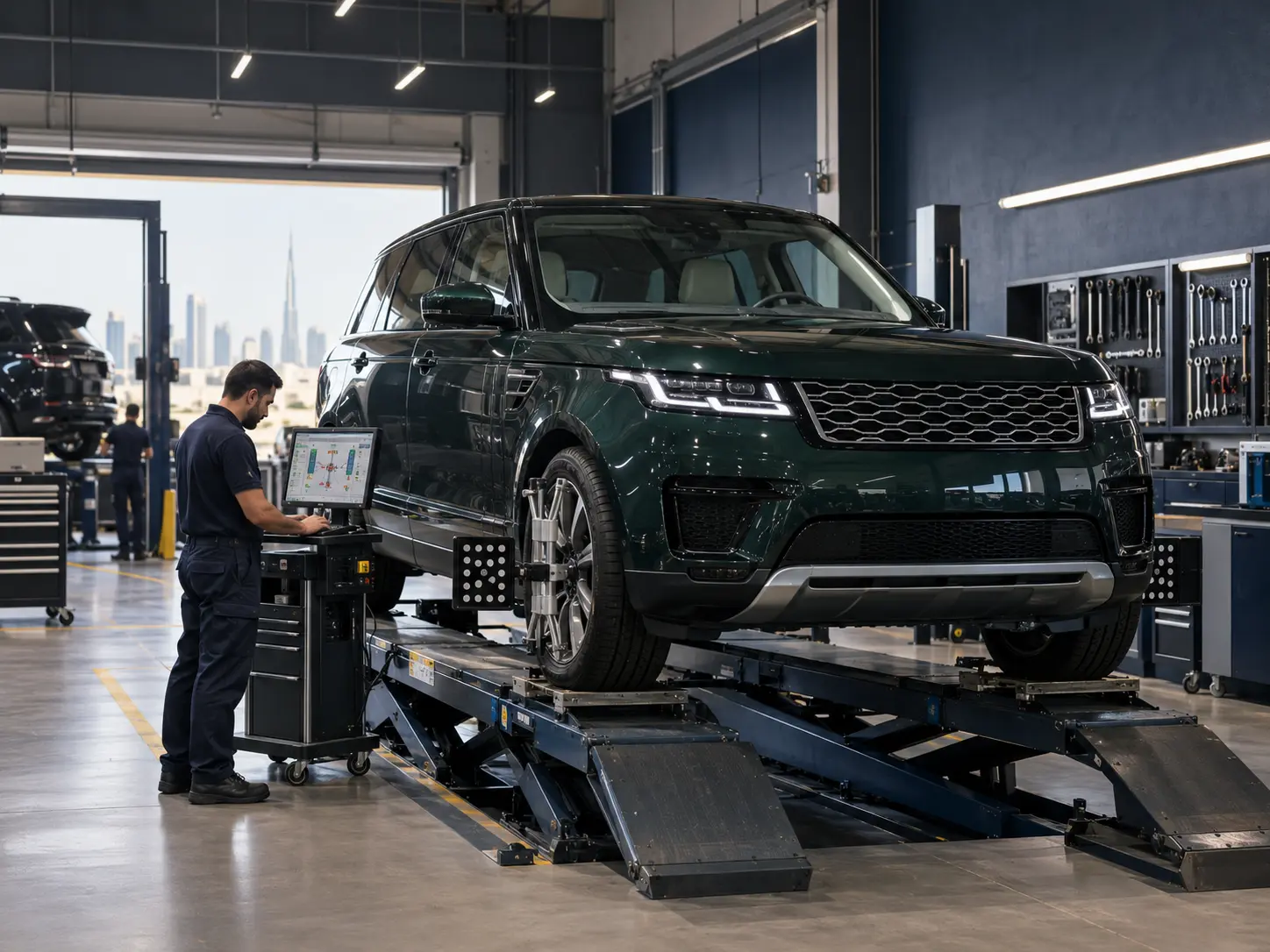
We inspect the tires and chassis, measure alignment, and confirm that adjustments can hold. Steering or suspension wear is repaired before the final alignment so the settings are not lost as soon as the vehicle returns to the road.
Vibration through the steering wheel
Speed-related vibration often begins with tires, wheels, hubs, or wheel balance, while vibration during braking can involve discs, hubs, suspension movement, or tire condition. A shudder during low-speed turning may point toward assistance, driveline load, joints, or fluid behavior.
The road condition and speed at which the vibration starts help us select the right checks. We separate rotating-wheel causes from steering wear and do not price a steering rack only because movement can be felt in the wheel.
Warning light with normal or reduced assistance
A steering warning can record voltage interruption, sensor disagreement, communication faults, calibration loss, motor or module problems, or a mechanical load outside the expected range. The wheel may still feel normal even when a fault is stored, or assistance may reduce to protect the system.
We record the warning information before clearing it, test the related power and signal paths, and verify any repair with setup and a road check. Coding or calibration is included only when required for the confirmed component.
Fluid leak or whining noise
Hydraulic fluid can escape from a hose, connection, reservoir, pump, cooler line, rack seal, or damaged boot area. A whining pump can result from low fluid, trapped air, contamination, restriction, or internal wear. Repeatedly topping up the reservoir does not correct the source and may allow the system to run low again.
We clean and inspect the suspected area, identify the fluid source, check system condition, and quote the smallest reliable repair. Fluid specification, bleeding, and a final leak review are included when they form part of the approved job.
Information that helps without delaying your booking
Tell us whether the symptom happens while parking, driving straight, braking, turning fully, or crossing bumps. Mention any recent curb strike, tire work, suspension repair, battery replacement, fluid top-up, or warning message. You do not need a diagnosis or complete vehicle file to request an appointment. We ask for the VIN only when exact parts matching or steering-system identification requires it.