Seats and bolsters
We assess torn covers, open seams, faded surfaces, burns, damaged piping, collapsed foam, loose backing, broken clips, and wear around controls. Seat airbags, heating, ventilation, and occupancy sensors remain part of the plan.
Ford interior workshop in Al Quoz 4
Repair torn seats, worn bolsters, loose roof fabric, damaged door trim, stained carpets, cracked vinyl, and tired cabin finishes with the right material and scope.
Choose the cabin area
The location quickly narrows the likely repair, removal work, material, and finish. Send the model plus the closest area below.
We assess torn covers, open seams, faded surfaces, burns, damaged piping, collapsed foam, loose backing, broken clips, and wear around controls. Seat airbags, heating, ventilation, and occupancy sensors remain part of the plan.
Drooping roof cloth usually follows failed foam backing rather than a simple loose edge. Roof consoles, grab handles, sun visors, panoramic openings, pillar trim, curtain-airbag areas, and rear-edge access affect the job.
Peeling inserts, damaged armrests, scratched vinyl, loose fabric, worn steering wheels, gear-lever trim, and console surfaces can be repaired or retrimmed according to their backing and daily contact.
Stains, tears, heel wear, burns, odors, wet underlay, pickup-cabin damage, and cargo-area marks are checked below the visible layer. Any water source should be corrected before fresh carpet or insulation is fitted.
Send one photo showing the whole seat, panel, or roof area and another close view in daylight. Include a third image of nearby material so color, grain, stitching, and sheen can be compared.
Match the material to the intended result
The correct choice depends on the original cabin, damage, use, budget, and how closely one repaired area must blend with its surroundings.
Suitable automotive fabric needs the correct stretch, backing, texture, and heat behavior. Roof material differs from seat cloth, and old headliner foam must be removed before a durable retrim.
Sound leather with surface wear may accept preparation and color restoration. Tears, hardened sections, missing material, or severe distortion usually need a replacement panel rather than more coating.
Durable vinyl or synthetic material can suit door inserts, commercial-use seats, and selected factory-style panels. Thickness, grain, flexibility, sheen, and heat exposure must suit the application.
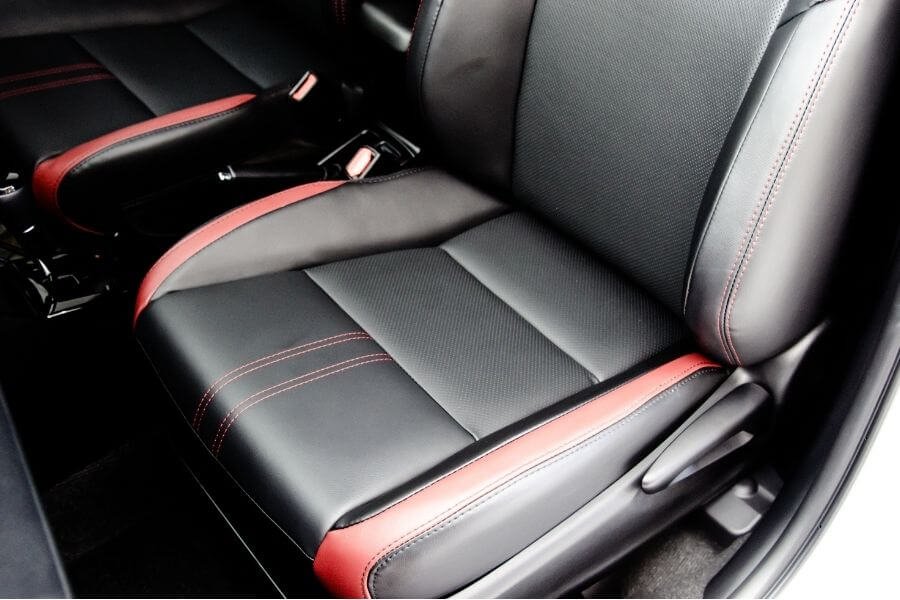
Perforated centers, contrast thread, piping, embossed sections, patterned fabric, suede-like inserts, and two-tone designs require closer sampling. The quote records the selected material and panels so the expected outcome is clear before dismantling.
Practical price ranges by damaged area
Final cost depends on panel size, material, stitching, foam, previous repairs, electrical features, removal access, and the level of finish selected.
| Interior work | Estimated price | Typical scope |
|---|---|---|
| Small fabric, vinyl, or burn repair | AED 350 to 950 | Localized preparation, repair, texture or color work, and finish check |
| Leather surface restoration | AED 500 to 1,600 | Cleaning, preparation, minor filling, matched coating, and protection |
| Seat bolster or single panel | AED 900 to 2,900 | Suitable replacement material, stitching, fitting, and adjacent-panel review |
| Seat foam repair | AED 650 to 2,000 | Cover removal, affected foam or support work, shaping, and refitting |
| Headliner retrim | AED 1,200 to 3,900 | Removal, old foam preparation, automotive cloth, fitting, and trim check |
| Door insert or armrest | AED 600 to 1,900 each | Panel access, backing review, material, retrim, and refitting |
| Steering wheel retrim | AED 800 to 2,300 | Approved material, stitching, grip finish, and control clearance |
| Complete cabin retrim | AED 10,000 to 32,000+ | Selected seats and trim areas, agreed design, materials, and fitting |
Our equivalent upholstery work can be 65% to 70% lower than agency pricing. The written estimate identifies material, affected panels, color or pattern work, removal, foam or backing repairs, VAT treatment, and expected timing.

Look beneath the visible mark
A small split can be caused by weak thread, hardened material, distorted foam, a sharp frame edge, or repeated entry wear. Covering the mark without correcting its support may allow it to open again.
For roof lining, the board and foam layer are checked across the full roof because a small sag can indicate broader adhesive failure. For carpets, the underlay and floor need to be dry before odor or trim work can be judged.
Color is assessed against the cabin as it exists today. Sunlight, cleaning, friction, and age can shift the visible shade away from the original production reference, making a physical sample and controlled blending more useful than relying on a name alone.
Choose the smallest sensible scope
Best for structurally sound leather or coated trim with fading, dye transfer, light abrasion, or minor cracks. Preparation and controlled color work preserve the original cover.
This route is not suitable when the material is torn through, badly stretched, brittle, or separating from its backing.
A driver bolster, seat center, door insert, armrest, or steering rim can be renewed while serviceable surrounding material stays in place.
The decision depends on finding a close material match and creating clean joins at original seam positions.
Multiple seats or cabin areas can be retrimmed when wear is widespread or the owner wants a new material and color direction.
The plan records every included panel so doors, seats, roof, carpet, and cargo areas do not become an uncontrolled project.
One detailed example case study
Vehicle and concern: a 2019 Ford Explorer with a worn driver bolster, an opening seam, soft outer foam, and roof cloth beginning to release near the rear edge.
Inspection: the seat material remained usable outside the bolster, the outer foam needed reshaping, seat functions operated normally, and the headliner foam had failed across more area than the visible sag suggested.
Approved work: replace the bolster panel with matched automotive material, rebuild the affected foam edge, restitch the neighboring seam, retrim the complete headliner board, and refit the removed roof trim.
Match the interior to the Ford model and use
Share the model, year, seat row, and damaged side. A VIN or trim reference may be requested when equipment or factory material is difficult to identify from photos.
A finish-led workshop process
Damage, material, foam, backing, functions, moisture, and earlier repairs are recorded.
Restoration, one-panel retrim, structural repair, or coordinated renewal is explained.
Included panels, sample, stitching, color work, price, and realistic timing are confirmed.
The approved work is completed, then seams, tension, controls, clips, edges, and cabin cleanliness are checked.
Unexpected broken backing, wet insulation, damaged wiring, old adhesive, or hidden foam failure is photographed and discussed before it changes the approved job.
Protect the new finish in Dubai heat
Fresh coatings, adhesives, stitched panels, and headliner material can have different settling requirements. Follow the handover timing before cleaning or applying conditioners.
Use a material-safe product and a soft cloth. Strong solvent, aggressive steam, rough brushes, and heavy dressings can damage coatings, backing, perforation, or thread.
Shade and cabin ventilation reduce heat load. Remove grit regularly and avoid dragging across the outer seat bolster during entry and exit.
Repair a loose seam, wet carpet, lifting edge, or early roof sag before movement spreads the damage. Avoid pins and spray glue on a headliner.
Interior repair questions
Yes, when the surrounding cover remains strong and a suitable material can be matched. Foam and seam condition are checked before choosing a local panel repair.
Surface preparation and matched color work can improve suitable leather or coated trim. Torn, brittle, or badly stretched material may need retrimming instead.
Dubai heat and age can break down the foam backing between the cloth and roof board. Removing the failed layer and fitting proper headliner material is more reliable than spot gluing.
Seats with airbag seams require correct identification and handling. The repair plan considers the original seam location, cover construction, connectors, and installed seat functions.
Localized surface work may be quick when capacity allows. Fabricated panels, headliners, foam rebuilding, special materials, and complete retrims require more workshop time.
The moisture source and underlay must be checked first. Cleaning the visible carpet alone may not solve odor if water remains beneath it or insulation is contaminated.
Yes. Free pickup and delivery can be arranged within the service area. The vehicle normally returns to the workshop for material matching and upholstery work.
Ford upholstery service in Dubai
Send the Ford model with wide and close photos. We will arrange the free Al Quoz 4 inspection or pickup and explain the material choices.