Knock and looseness repair
Suitable when the vehicle knocks over bumps, changes direction during braking or feels loose. We check control arms, bushes, ball joints, stabilizer links, mounts and fasteners before recommending replacements.
Restore stable handling, correct ride height and controlled braking when your Dodge knocks, bounces, pulls, leans, sits low or wears tires unevenly. We inspect the complete chassis before quoting parts.
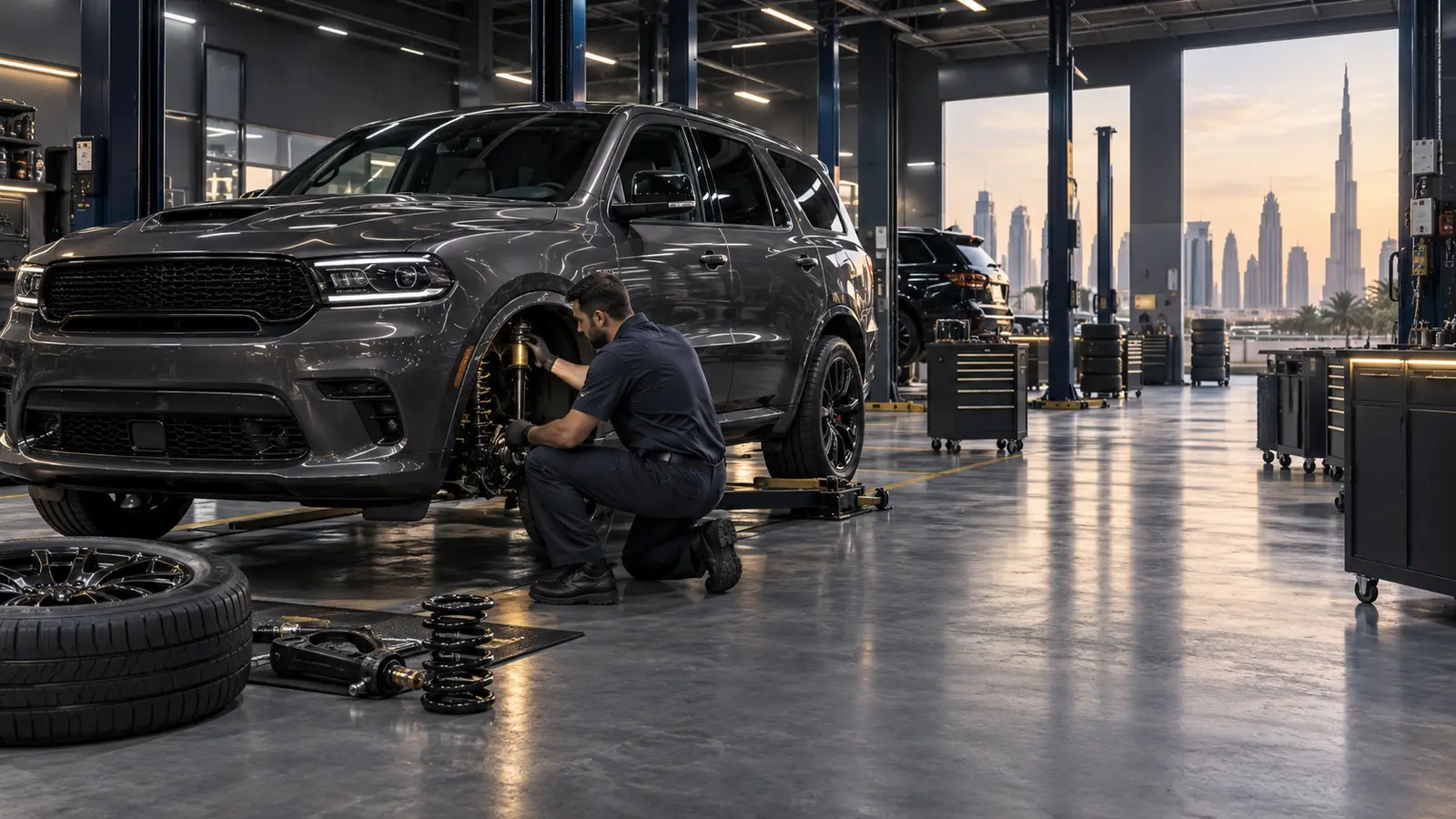
Shock, spring, arm, bush, joint, wheel and alignment condition are checked as one connected system.
Suspension repair is not one package. The correct choice depends on where the movement starts, the vehicle’s ride height, recent impacts, tire condition and whether the model uses conventional, performance or load-leveling equipment.
Suitable when the vehicle knocks over bumps, changes direction during braking or feels loose. We check control arms, bushes, ball joints, stabilizer links, mounts and fasteners before recommending replacements.
Suitable when the Dodge continues moving after a bump, dives excessively, floats at speed or leaks from a shock. Dampers, struts, mounts, springs and tire condition are compared across the axle.
Suitable for a low corner, rear sag, compressor activity or leveling warning on equipped models. Air lines, springs, sensors, compressor, valves, wiring and mechanical support are checked together.
We lift the vehicle and check wheel movement, bush separation, joint play, spring condition, damper leakage, mount damage and signs of impact. A visible failed part is compared with the same area on the opposite side.
Models with electronic damping or leveling may need fault-code, voltage, wiring, sensor and live-data checks. A warning does not automatically mean a compressor or complete strut has failed.
The written estimate separates the confirmed cause from worn related parts and optional preventive work. Request your free inspection or free pickup so the vehicle can be assessed safely.
Send Dodge DetailsThese market-based ranges are estimates in AED. The final total varies by model, suspension type, part source, axle, access, alignment needs and additional damage. The written quote confirms labor, parts and required finishing checks.
| No. | Repair scope | Estimated total | Usually includes |
|---|---|---|---|
| 01 | Stabilizer link or bush repair | AED 450 to 1,250 | Affected parts, fitting and movement check |
| 02 | Control arm or ball-joint repair | AED 900 to 2,800 | Selected arm or joint, labor and geometry assessment |
| 03 | Shock or strut replacement | AED 1,400 to 4,800 per axle | Applicable dampers, fitting and mount inspection |
| 04 | Coil spring and mount work | AED 1,100 to 3,500 | Selected spring or mount parts and installation |
| 05 | Load-leveling or air suspension repair | AED 2,200 to 8,500 | Fault-specific component, labor and system checks |
| 06 | Wheel alignment after repair | AED 250 to 650 | Geometry measurement and adjustment where possible |
The initial workshop inspection is free. If the vehicle needs extended electronic diagnosis, dismantling or specialist testing, that cost is explained before the work starts. VAT treatment and exact parts basis are stated in the written quote.
A sharp knock over small bumps often points toward a link, bush, joint or mount, but loose brake or underbody hardware can sound similar. A dull movement during braking can come from an arm bush, while repeated bouncing points more toward weak damping. Tire pressure and damaged wheel assemblies can also imitate suspension trouble.
If one corner sits low, we compare spring condition, mounting and, where equipped, air-suspension pressure and height information. A compressor that runs frequently may be reacting to a leak rather than causing it. Replacing the compressor without finding the loss can damage the new unit.
Pulling and uneven tire wear require mechanical and tire checks before alignment. A bent arm, loose joint, shifted subframe, damaged wheel or separated tire cannot be corrected with adjustment alone. Geometry is measured after the suspension is secure.
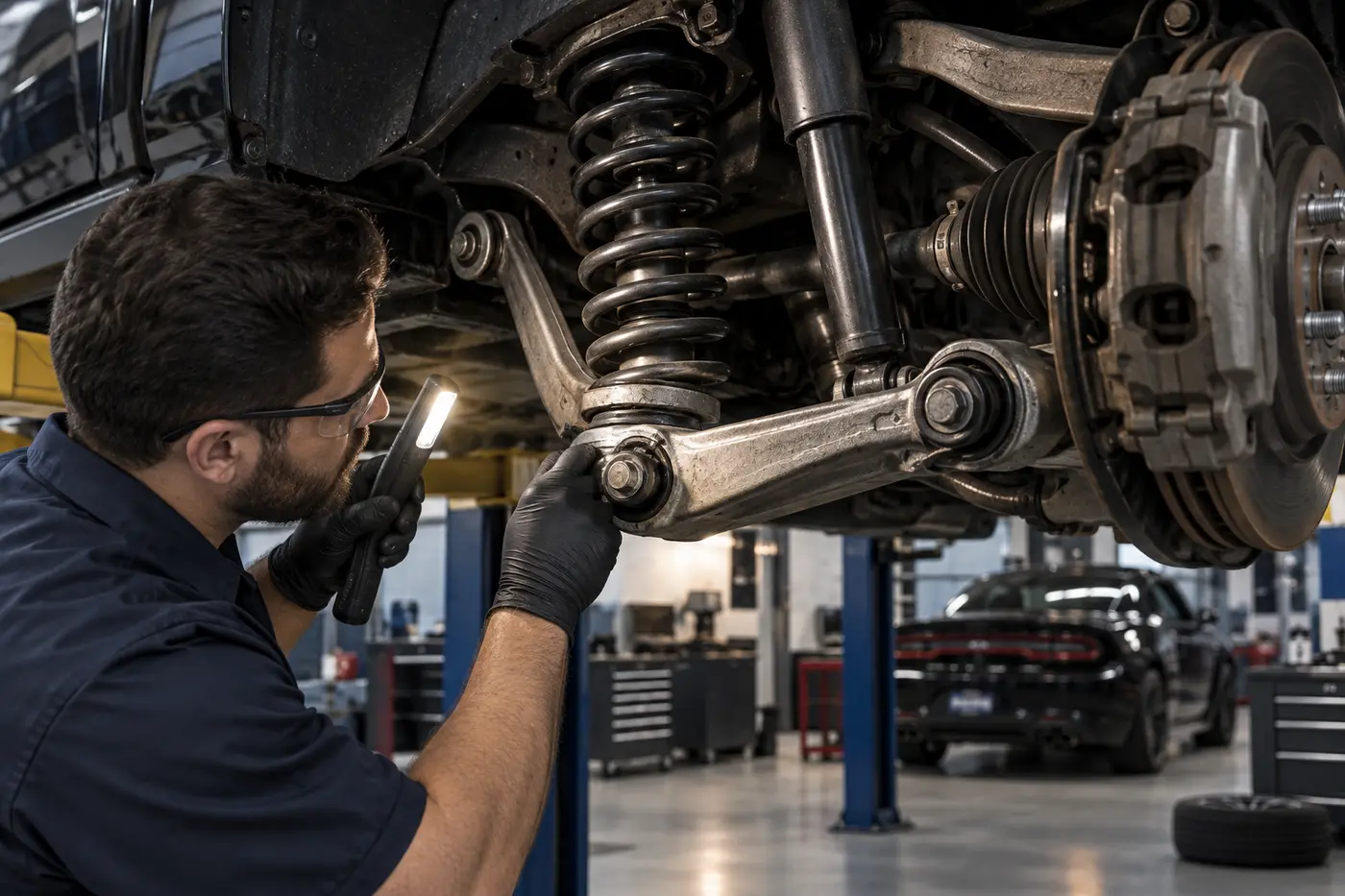
Close inspection distinguishes a worn bush or joint from a complete strut or air-system failure.
Do not continue if a wheel changes position, the tire rubs the body, a spring is broken or displaced, the vehicle drops heavily on one corner, steering control changes sharply or a joint has severe movement. Free pickup and delivery are available.
A short trip may be reasonable for a mild, consistent noise when steering, braking, ride height, tire clearance and temperature remain normal. Reduce speed and avoid rough roads. If uncertain, call before moving the vehicle.
A dedicated on-site inspection can be arranged when appropriate. Explain whether the Dodge starts, moves, steers and has normal wheel clearance. Availability and any applicable visit fee are confirmed before dispatch.
We inspect Dodge Charger, Challenger, Durango, Journey, Neon, Dart, Grand Caravan, Viper and other supported models. The exact suspension layout changes by year, trim, drivetrain and market specification. Performance packages, larger wheels and load-leveling equipment require the fitted parts to be identified correctly.
Performance sedans and coupes can develop arm, tension-strut, link, damper, mount and alignment concerns that affect braking stability and tire wear. Wheel size and previous impact history matter when vibration or pulling is present.
SUV weight makes damping, rear load support, bushes, bearings and tire condition important. Equipped models may add self-leveling components that need separate leak, sensor and control checks.
Ride height, adjustable components and performance geometry should not be treated like a standard commuter alignment. We record the symptom and fitted setup before selecting the service path.
These are realistic cost scenarios, not completed customer records. Final cost depends on inspection, parts source, model specification and vehicle condition.
AED 2,150
Replacement of one worn front control-arm assembly with fitting, related joint checks and wheel alignment. No subframe or wheel damage assumed.
AED 3,400
Rear axle-pair shock replacement with mount inspection, installation and road verification. Air-leveling components are not included.
AED 4,650
Front strut and related link replacement after a wheel impact, followed by geometry measurement and adjustment. Tire and wheel replacement are excluded.
We record the noise, movement, warning and recent impact history. Tire pressures, wheel condition, ride height and visible suspension condition are checked before parts are proposed.
Joint movement, bush condition, damper leakage and mounting are checked on the lift. Electronic or air systems receive relevant scan, voltage, sensor and leak checks.
You receive the recommended scope, parts basis and estimated total. After approval, the repair is completed, fasteners are secured correctly and related checks are performed.
Final verification may include ride-height comparison, leak checks, fault review, alignment measurement and a controlled road test. The handover explains the work completed and any related condition that should be monitored. We do not add unrelated work without approval.
A stabilizer link, bush or ball joint can often be repaired separately when the surrounding assembly remains serviceable. Some control arms contain integrated joints and are replaced as a unit. Dampers may be recommended in axle pairs when unequal control would affect handling, but the opposite side’s condition still matters.
For load-leveling systems, the failed component may be an air spring, line, fitting, height sensor, valve, compressor, relay or electrical supply. Leak testing and control checks prevent an unnecessary complete-system quote. New, quality aftermarket, remanufactured or other suitable parts may be discussed when available and appropriate. The written estimate identifies the selected basis.
Alignment corrects adjustable wheel geometry after mechanical condition is secure. It cannot tighten a worn joint, restore a weak damper, straighten a damaged arm or repair a separated tire.
If adjustment cannot reach the required range, we look for damage, shifted mounting points, worn components or nonstandard ride height before recommending further work.
Maintain correct tire pressure and avoid driving quickly through potholes, sharp ramps and deep road edges. Extra wheel diameter and low-profile tires can transfer more impact into arms, bearings and dampers. After a heavy impact, inspect the affected corner even if the vehicle still drives straight.
Do not ignore a small leak or low corner. A weak damper can increase tire movement and braking distance, while an air leak can force a compressor to run repeatedly. Uneven tire wear is a reason to inspect the chassis, not simply replace tires and align the wheels again.
When carrying regular loads, keep within the vehicle’s limits and watch for rear sag or tire contact. Report new noises soon after any suspension work so mounting, settling or an unrelated worn component can be checked before additional wear develops.
A useful suspension estimate identifies the affected corner or axle, the selected part type, fitting labor and the checks needed after installation. Ask whether mounts, bushes, fasteners, alignment or electronic setup are included when they are relevant. A low parts-only figure should not be compared with a complete installed repair.
The cheapest path is not always replacing the smallest visible part. If a worn joint is integrated into an arm, the safe supported repair may be the complete assembly. In contrast, a warning from a load-leveling system does not justify replacing every controlled component. Testing should narrow the fault before the quote grows.
We explain the confirmed need, related wear and optional work separately. You can approve the required repair without being forced into unrelated maintenance. If hidden damage appears after authorized dismantling, the new finding and revised total are discussed before additional work continues. This keeps the decision clear and prevents surprise additions at handover.
Yes. The initial workshop inspection is free. Any deeper electronic diagnosis, dismantling or specialist testing is explained before it begins.
Axle-pair replacement is often appropriate when unequal damping could affect stability, but the fitted design and condition of both sides guide the recommendation.
No. Alignment changes geometry and does not repair a loose joint, bush, mount, spring or damper. Mechanical condition is checked first.
Possible causes include spring condition, load, leveling shock or air-system faults on equipped models. Ride height and the fitted system must be identified before parts are chosen.
A mild seep needs inspection, while heavy leakage, poor control, tire contact or unstable braking requires the vehicle to stop. Call if you are uncertain.
Yes. Free pickup and delivery are available. Describe whether the vehicle sits low, steers normally and has safe wheel clearance.
A link or bush job may take less time than a strut, seized arm or controlled leveling repair. Diagnosis, parts availability and alignment needs determine timing.
Send the Dodge model and a short description of the noise, movement or warning. The year, mileage and photos are optional details that may help later.
Book a free workshop inspection or free pickup and delivery. We will identify the failed area, explain suitable repair choices and provide a written estimate before work starts. Brake noise, pedal changes, or braking vibration should follow the Dodge brake repair route.