Curb rash and edge scuffs
Light contact can remove paint, mark the machined face, or cut into the rim edge. We assess depth, location, finish, and previous repairs before recommending local correction or a complete face refurbishment.
Wheel inspection and refinishing · Al Quoz 4
Restore a damaged Rolls-Royce wheel with a repair plan based on its structure, finish, tyre, and driving symptoms. We inspect curb rash, bends, cracks, corrosion, paint damage, diamond-cut faces, vibration, and air loss before recommending refurbishment or replacement.
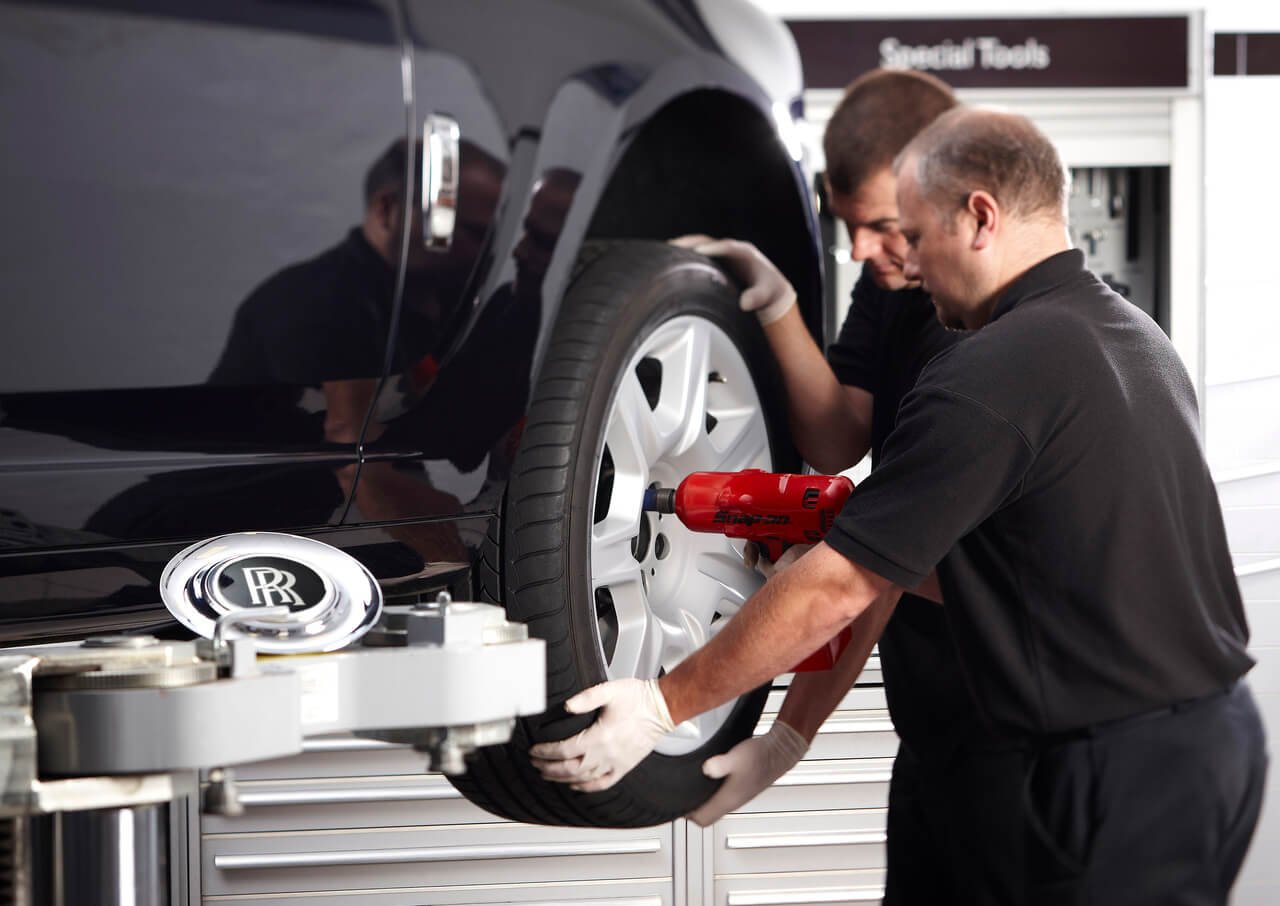
Start with the condition
A mark on the face may be cosmetic, while vibration, pressure loss, or a visible change in shape can indicate structural damage. The repair route should follow measurement and inspection rather than appearance alone.
Light contact can remove paint, mark the machined face, or cut into the rim edge. We assess depth, location, finish, and previous repairs before recommending local correction or a complete face refurbishment.
A pothole impact can change radial or lateral runout. Symptoms include steering vibration, seat vibration, repeated balancing difficulty, uneven tyre wear, or an air leak at the bead. Straightening is considered only when the wheel remains suitable.
Cracks require careful location and severity assessment. Damage near spokes, bolt holes, or heavily stressed areas may make replacement safer than repair. We do not promise welding until the bare wheel has been evaluated.
Moisture, harsh cleaning products, brake dust, earlier coating failure, and damage around the tyre bead can affect the finish. Proper preparation is needed so new coating is not placed over unstable material.
Many luxury wheels combine a machined face with painted pockets and clear coat. The remaining material, wheel profile, original appearance, and previous machining determine whether another diamond-cut cycle is suitable.
A leaking tyre is not automatically a cracked rim. The tyre, bead seat, valve, TPMS component, puncture area, corrosion, and wheel structure should all be checked before the source is confirmed.
Repair, refinish, or replace
The correct option protects appearance without ignoring safety, fit, or long-term finish quality. We explain what can be restored, what will remain visible, and when a replacement wheel is the better decision.
The tyre is removed when the work requires complete access. The wheel is cleaned and prepared, superficial damage is corrected, suitable primer and color are applied, and the finish is protected. Color, gloss, texture, and surrounding wheels are considered.
Runout is measured before and after controlled correction. Straightening is not suitable for every wheel or every impact. Severe deformation, extensive previous work, unsafe cracks, or damage in critical areas can lead to a replacement recommendation.
A repair may be considered for selected damage after inspection. Location, length, deformation, material condition, heat history, and previous welding influence the decision. A structurally unsuitable wheel should be replaced.
The face is machined only when the wheel has enough serviceable material and the profile can be reproduced responsibly. Painted areas, clear coat, center-cap appearance, and final balance are included in the planning.
A color change can be discussed for a complete set, but the intended shade, gloss, metallic effect, center caps, fasteners, and future touch-up expectations should be agreed first. A single-wheel color change can look inconsistent.
Replacement is recommended when repair would not provide a sensible safety or finish outcome. Diameter, width, offset, load rating, bolt pattern, hub fit, brake clearance, finish, and compatibility with the existing set must be confirmed.
Estimated workshop guidance
These market-based ranges are planning estimates in AED. Wheel size, construction, damage, tyre removal, finish, color matching, machining, previous repairs, balancing, and replacement-part availability can change the final total. A written estimate follows inspection.
| Repair or service | Estimated price | Typical inclusion | Main price factors |
|---|---|---|---|
| Minor curb-rash correction | AED 350 to 750 per wheel | Preparation, local surface correction, color and clear-coat work where suitable | Depth, edge shape, finish, and blend area |
| Full painted-wheel refurbishment | AED 650 to 1,250 per wheel | Tyre removal where required, preparation, coating, curing, refitting, and balance | Wheel size, color, corrosion, and earlier coatings |
| Diamond-cut refurbishment | AED 850 to 1,650 per wheel | Assessment, preparation, face machining when suitable, clear coat, and balance | Profile, remaining material, damage, and wheel diameter |
| Bent-rim straightening | AED 450 to 1,100 per wheel | Runout measurement, controlled correction when suitable, and verification | Severity, location, cracks, material, and previous repair |
| Selected crack repair | AED 550 to 1,400 per wheel | Bare-wheel assessment and approved repair for suitable damage | Crack location, length, deformation, and finish restoration |
| Four-wheel color refurbishment | AED 2,800 to 6,000 | Set preparation, coordinated color and finish, tyre handling, and balancing | Wheel size, selected finish, corrosion, and center-cap work |
| Wheel balance and runout check | AED 180 to 450 per wheel | Visual assessment, runout review, balance, and tyre-condition notes | Wheel size, tyre type, and diagnostic time |
| Replacement wheel sourcing | Quoted after identification | Compatibility check, sourcing options, fitting, balance, and final inspection | Model, specification, new or used condition, and availability |
Photographs can help us discuss likely options, but bending, cracks, bead-seat damage, and prior repairs may only become clear after the wheel and tyre are inspected.
For equivalent scope and materials, independent workshop pricing can be around 65% to 70% below comparable agency pricing. The actual difference depends on the selected repair and wheel specification.
Measure before refinishing
A polished surface cannot correct an out-of-round wheel, and a new coating cannot stop pressure loss caused by a tyre, valve, or structural fault. We begin with the complaint: visible damage, vibration speed, steering change, air-loss pattern, impact event, or finish concern.
The tyre and wheel are checked for impact marks, runout, cracks, edge damage, bead-seat condition, corrosion, earlier welding, repeated machining, and unusual heat exposure. Tyre age, sidewall damage, tread condition, balance weights, valve, and TPMS condition are reviewed when relevant.
Where the wheel is removed, the hub contact surface and fastener seating areas can also be reviewed. This helps separate wheel damage from tyre irregularity, hub contamination, suspension wear, or alignment concerns.
Send one photograph of the complete wheel, a close view of the damaged area, and a wider photograph showing the vehicle side. If there is a pressure or vibration concern, tell us how quickly pressure drops and the speed at which vibration is felt.
A photograph cannot verify runout, an internal crack, remaining material after earlier machining, bead sealing, balance, or safe structural condition. The final recommendation and estimate follow physical inspection.
Controlled wheel restoration
Record the damage, tyre condition, finish, pressure or vibration concern, and any earlier wheel work.
Check runout and structural condition when required, then decide whether repair, refinishing, or replacement is suitable.
Confirm the repair scope, intended finish, estimated price, tyre work, balance, and expected timing in writing.
Complete the approved structural or cosmetic process with controlled preparation, coating, machining, and curing.
Refit the tyre and valve components as applicable, balance the assembly, inspect the finish, and complete relevant checks.
Luxury finish details
Rolls-Royce wheels can include painted, polished, machined, contrasting, and multi-part visual details. The repaired wheel should be assessed beside the remaining set, not treated as an isolated color sample.
Age, cleaning history, sun exposure, earlier repairs, and clear-coat condition can make a nominal paint code look different on the vehicle. Adjacent wheels may need cleaning or correction before the match is judged.
Self-righting center caps, emblems, fastener covers, contrasting pockets, and polished edges should be protected and handled separately. A damaged or faded cap may need replacement rather than wheel refinishing.
Large low-profile tyres require careful removal and refitting. Valve and TPMS condition are checked when disturbed. A damaged tyre, aged rubber, or leaking valve is estimated separately from the rim repair.
Realistic repair planning
These are planning scenarios, not completed customer repairs or quotations for your vehicle. The final total follows inspection and the approved repair route.
Typical job estimate
Inspection of one painted alloy wheel, tyre removal where required, edge correction, preparation, matched coating, clear coat, refitting, and balance.
AED 850 to 1,350
Typical job estimate
Runout measurement, controlled straightening of one suitable wheel, finish inspection, tyre and valve review, refitting, balancing, and verification.
AED 750 to 1,450
Typical job estimate
Four-wheel cosmetic refurbishment in an agreed painted finish, tyre removal and refitting, coordinated preparation, coating, curing, and balancing.
AED 3,400 to 5,800
Match the exact vehicle specification
Wheel design, diameter, width, finish, tyre specification, load, braking package, and model year affect the correct repair and replacement route. We verify the actual wheel rather than relying only on the model name.
Ride refinement makes small vibration concerns noticeable. Wheel runout, tyre uniformity, balance, pressure, and hub seating should be considered together before refinishing alone is approved.
SUV weight, large wheel sizes, low-profile tyres, and road impacts can influence structural assessment. Load rating, tyre condition, and replacement-wheel specification require careful matching.
Distinctive finishes and large wheel designs can make color, machining, profile, and cap details especially visible. The repair plan should protect the intended appearance while respecting material limits.
Safety before appearance
Stop safely if a tyre loses pressure rapidly, the wheel is visibly deformed, vibration becomes severe, steering changes suddenly, the tyre sidewall is cut or bulged, or an impact is followed by unusual noise or instability. Continuing can damage the tyre, wheel, suspension, brake, or bodywork.
A mild cosmetic scuff with normal pressure, steering, and vibration may allow a short workshop trip, but describe the condition first if you are uncertain. Free pickup and delivery can be arranged when driving is not sensible.
Damage affects a critical spoke or mounting area, deformation is severe, cracks are extensive or poorly located, previous welding is unsuitable, repeated machining has reduced serviceable material, or the wheel cannot be restored to acceptable runout and sealing.
A strong pothole impact can also affect the tyre, alignment, wheel bearing, steering, or suspension. Those items are inspected or estimated separately when the symptoms indicate a wider concern.
Workshop support across Dubai
Our workshop is in Al Quoz 4, Dubai. Free pickup and delivery can be arranged. A dedicated on-site inspection van is available by arrangement for an initial assessment, while tyre removal, measurement, straightening, machining, controlled coating, curing, and balancing are completed at the workshop.
Send the model, year, wheel position, damage description, and clear photographs. Mention any vibration, pressure loss, recent impact, tyre warning, or previous rim repair. We will help plan the safest next step.
A minor cosmetic repair may be completed quickly when capacity and materials allow. Structural assessment, diamond cutting, special colors, multiple wheels, replacement sourcing, or additional tyre and suspension work can require more time. Timing is confirmed after inspection.
We review the visible finish, tyre seating, pressure, valve area, and balance as applicable. Any aftercare or cleaning restrictions are explained before the vehicle is returned.
Protect the restored finish
Use the handover advice for washing and chemical exposure while the repaired finish reaches the appropriate condition. Avoid aggressive cleaners or abrasive brushes unless they are confirmed suitable.
Use a suitable pH-balanced product, clean tools, and gentle contact. Allow wheels to cool before washing. Harsh acids and repeated automatic-brush contact can damage clear coat and polished details.
Recheck the wheel after a new impact, pressure loss, vibration, steering change, or visible crack. Early inspection can prevent a tyre or suspension concern from becoming more serious.
Direct wheel repair answers
Minor curb-rash correction commonly starts around AED 350 to 750 per wheel, while full painted or diamond-cut refurbishment can cost more. Structural correction, wheel size, finish, tyre handling, and previous repairs affect the total. Inspection confirms the written estimate.
No. The deformation, crack location, material condition, previous repairs, and ability to restore acceptable runout determine suitability. A severely damaged or structurally unsuitable wheel should be replaced.
Selected cracks may have a repair route after the bare wheel is inspected. Damage near spokes, bolt holes, or heavily loaded areas may not be suitable. We confirm the recommendation only after assessing location and severity.
Diamond-cut refurbishment may be possible when the profile and remaining material allow another machining cycle. Painted pockets, clear coat, adjacent wheels, and earlier machining are considered before the finish is approved.
It can help when wheel runout is the confirmed cause, but tyres, balance, hub seating, alignment, bearings, steering, or suspension can produce similar symptoms. Diagnosis should separate these possibilities before repair.
Tyre removal is normally required for complete refurbishment, structural assessment, bead-seat access, machining, or work that could affect the tyre. The exact process depends on the approved repair scope.
Timing depends on the number of wheels, damage, finish, machining, curing, and workshop capacity. A simple cosmetic repair may be faster than a set refurbishment or structural job. We confirm timing after inspection.
Free pickup and delivery can be arranged. Tell us if the tyre is flat, pressure drops rapidly, the wheel is visibly bent, or the vehicle vibrates or steers abnormally so suitable transport can be planned.
Start with the damaged wheel
Send the model, wheel position, damage, and photographs. We will help you choose between cosmetic refurbishment, structural assessment, diamond-cut restoration, or replacement and prepare a written estimate before approved work begins.