Four-cylinder petrol
AED 450-700Estimated complete oil and filter service for a typical C-Class, CLA, GLA or similar four-cylinder engine using the confirmed oil specification.
Engine lubrication and maintenance
Book a Mercedes engine oil and filter service in Al Quoz 4. We match the oil specification and fill quantity to your engine, inspect accessible leak points, verify the level and explain the complete price before work begins.

The short answer
A useful Mercedes oil change is not based on a universal bottle grade or a mileage copied from another model. You can start with the model and the oil-change request. We confirm the year, engine and, where necessary, the VIN before choosing the oil specification, filter and fill quantity. The service indicator and documented maintenance history also matter. If the history is unclear, the sensible first step is to inspect what is known rather than invent a previous service date.
The service covers engine oil and the engine oil filter. Automatic transmission fluid, differential oil, transfer-case fluid, brake fluid, coolant and hydraulic steering fluid are separate fluids with separate service decisions. Keeping those jobs distinct prevents a customer asking for an engine oil change from receiving a vague package that mixes unrelated work.
A service route, not a fluid guess
The order matters. Selecting oil before identifying the vehicle can create an avoidable specification error, while draining oil before checking a warning can remove evidence that the engine needs diagnosis.
We use the vehicle details to establish the engine family and the service information available for that specification. Similar model names can have different engines, capacities and approval requirements.
A routine reminder is different from a low oil-pressure warning, a burning smell, repeated top-ups or visible oil beneath the car. A warning or active leak may need diagnosis before routine maintenance proceeds.
The oil is selected by the applicable specification, not by viscosity alone. The filter, sealing ring and drain-plug arrangement must also match the engine and service method.
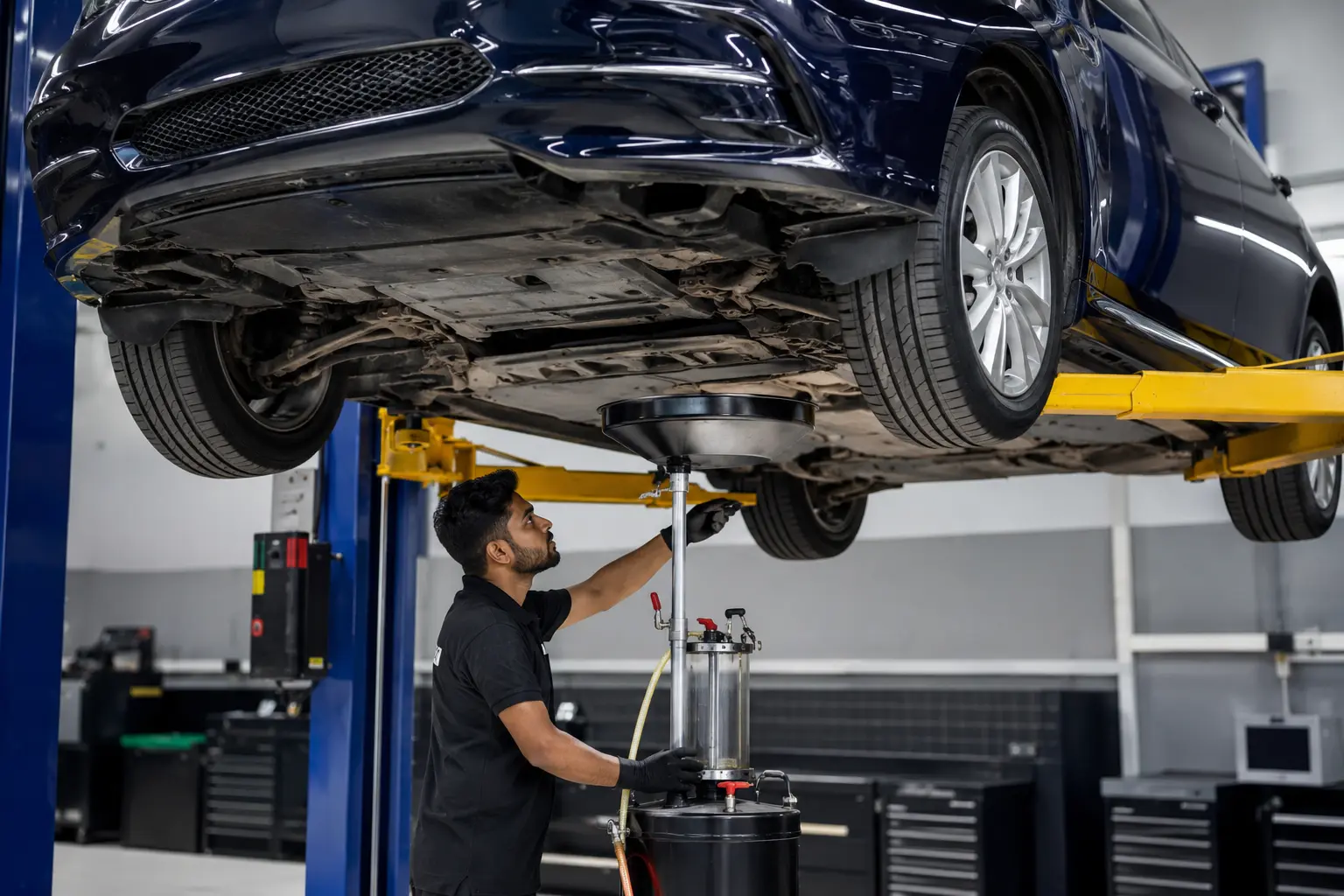
The vehicle is raised safely, the old oil is drained into suitable collection equipment and accessible sealing areas are inspected. Unusual contamination or damaged threads are reported rather than hidden.
The engine is filled in a controlled way. The level is checked using the procedure appropriate to the vehicle, which may involve an electronic reading, temperature condition or a conventional dipstick.
The engine is run, the filter and drain area are checked for leakage, the service information is handled as agreed and the customer is told about any separate issue noticed during the visit.
These estimated Dubai prices include suitable engine oil, an oil filter, standard installation and level verification for the stated service. The final written quote depends on engine capacity, required approval, oil quantity, filter type, access and any damaged hardware. VAT treatment is stated in the quote.
Estimated complete oil and filter service for a typical C-Class, CLA, GLA or similar four-cylinder engine using the confirmed oil specification.
Estimated approved-specification oil, filter, drain sealing item, labor and level check. Capacity and emissions-system requirements can change the total.
Estimated complete service for a typical E-Class, GLE or comparable six-cylinder application. Exact oil quantity and filter design are confirmed first.
Estimated higher-capacity oil and filter service. Engine specification, approved oil, access and performance variant affect the price.
Estimated oil, filter, labor and level verification for a Vito or Sprinter. Engine type and commercial specification are confirmed before quoting.
The first workshop inspection is free. Cleaning, dye testing, extended diagnosis or dismantling is priced separately. Comparable work may be 65% to 70% lower than agency pricing when scope and parts are equal.
Specification before brand preference
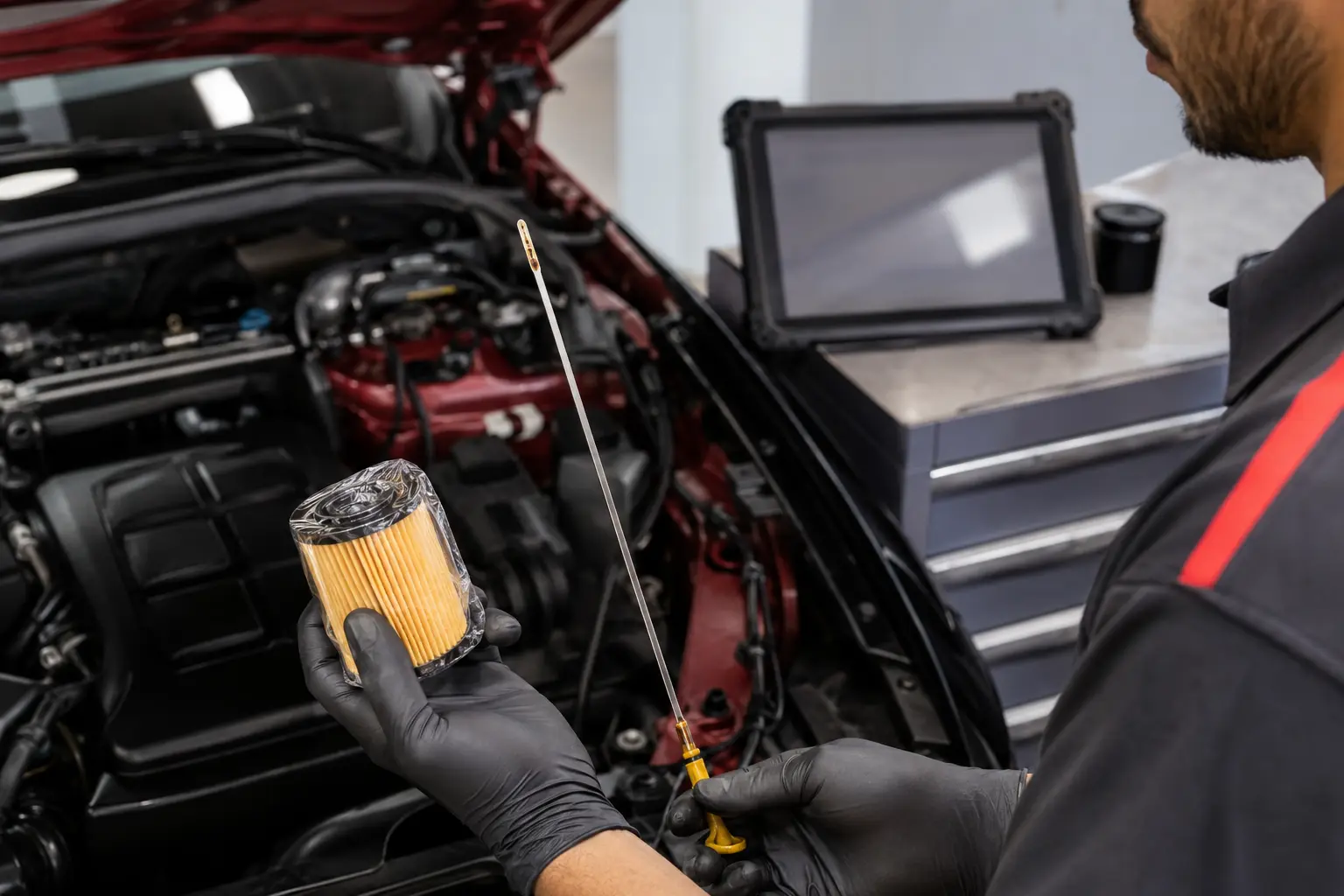
Two containers can show the same viscosity grade while meeting different manufacturer specifications. Viscosity describes how an oil flows under defined conditions. It does not, by itself, confirm the additive package, emissions-system compatibility or the approval required by a particular engine. For that reason, we do not promise one oil for every Mercedes.
Diesel engines with particulate filters, petrol engines from different generations, high-output variants and vans may have different requirements. Imported vehicles can also differ from a familiar GCC-market specification. The right answer comes from identifying the vehicle and checking the applicable service information.
If the customer supplies oil, the container, quantity and stated specification should be reviewed before the vehicle is drained. If compatibility cannot be established, the uncertainty should be resolved first. A customer-provided product is not automatically correct because it was sold for a Mercedes.
Engine oil colour alone does not measure remaining protection. Diesel oil can darken quickly, while petrol oil may still look clean after its useful interval has passed. Service history, operating conditions and the correct specification provide better context.
Routine service or diagnosis
The dashboard shows scheduled maintenance and the engine otherwise behaves normally. Share the message, mileage and last known service information.
Frequent top-ups can point to an external leak, consumption or an incorrect previous fill. Record how much oil was added and over what distance.
A red oil-pressure warning is not a routine service reminder. Stop when it is safe and arrange assessment. Continuing to run the engine can increase damage.
Oil reaching a hot surface can produce a smell or smoke. The source should be located before assuming that an oil change will resolve it.
Fluid location and colour help, but several systems can leak. A clean inspection is more reliable than naming a seal from the parking mark alone.
Noise, temperature warnings or rough operation can require mechanical or cooling-system diagnosis. Fresh oil is not a substitute for finding the cause.
There is no honest universal interval
Use the maintenance information for the exact model and engine as the starting point. The service display can help, but it should be interpreted with the vehicle history. A reset reminder does not prove that the correct oil and filter were fitted, and a missing record does not tell us when the last service actually occurred.
Short journeys, extended idling, frequent heat exposure, dusty operating environments, sustained high load and an engine that consumes oil can change the practical maintenance discussion. Those conditions do not justify inventing a single shorter interval for every driver. They are reasons to review how the vehicle is used and to check its level between services.
If you have just purchased a used Mercedes without reliable records, we can establish a maintenance baseline after reviewing the car. That baseline may include an oil service, but other fluids and filters are assessed separately. Replacing every fluid without confirming condition, specification or history is not automatically the better decision.
Clear service boundaries
A clear scope is easier to approve and easier to verify at handover.
| Item | Oil-change visit | What may require a separate decision |
|---|---|---|
| Engine oil | Correct specification and controlled fill | Leak diagnosis, consumption testing or internal engine work |
| Oil filter | Matched replacement with sealing area checked | Housing repair, damaged threads or persistent leakage |
| Oil level | Verified using the applicable procedure | Faulty level sensing or an inconsistent electronic reading |
| Visible condition | Accessible drain, filter and engine-bay areas checked | Cleaning or dismantling needed to trace a concealed leak |
| Service information | Handled as agreed after work is completed | Missing digital history, unrelated warnings or module faults |
| Other fluids | Obvious concerns can be reported | Transmission, coolant, brake, differential and hydraulic fluid service |
Cars, SUVs and vans
We can plan oil service for Mercedes saloons, estates, coupes, convertibles, SUVs and vans, subject to confirming the exact vehicle and workshop access. The C-Class, GLE, Sprinter, S-Class, GLC, A-Class, V-Class, E-Class, GLS, CLA, CLS and G-Class names each cover multiple generations and engine families.
A C300 from one market or year is not assumed to match every other C300. The same caution applies to AMG-badged vehicles, diesel models, plug-in hybrids and commercial vans. Sending the VIN allows the workshop to check the service route before promising a product or quantity.
This page owns engine oil-change intent. If the concern involves delayed shifting, a gearbox leak or transmission-service history, use the relevant Mercedes transmission repair page. Keeping the two subjects separate produces a clearer diagnosis and avoids describing transmission fluid as an engine oil service.

A handover you can check
The handover should state what engine oil specification was used, which filter was fitted and whether a separate issue was observed. If a leak, damaged undertray, stripped fastener or inconsistent level reading changes the job, the customer should be told before additional work proceeds where practical.
The service described here is delivered independently in Al Quoz by AMF Auto Services. The workshop is neither a Mercedes dealership nor a manufacturer-authorised repairer. That distinction matters because service-history access, parts channels and software functions can vary by vehicle and source.
You can also review the wider Mercedes repair services in Dubai or the generic car oil change service. Those pages summarise broader intent; this page remains the owner of Mercedes engine oil-change questions.
The invoice should preserve the maintenance evidence
An engine oil service becomes more useful at the next visit when the record identifies the vehicle, date, mileage, oil specification, quantity where recorded and filter supplied. A line that only says service completed gives the next owner or technician little help. Keep the invoice with any digital or booklet entry and do not rely on the dashboard countdown as the complete history.
If the drained oil, filter housing, plug, undertray or accessible engine area reveals a concern, it should appear as a separate observation. That wording matters. An observation such as fresh oil around the filter area is evidence for further checking, while declaring a hidden seal failed without tracing the source is a conclusion the visit may not support.
Photograph the dashboard message before it is cleared. Note recent top-ups and the oil used, especially if the warning appeared soon after another service.
A damaged plug, thread, housing or sealing face can change the scope. It should be discussed before an improvised repair or unrelated component replacement.
Follow the vehicle’s level-reading procedure and any handover advice. Report a warning, fresh leak or unexpected consumption rather than repeatedly adding oil without measurement.
A falling level needs its own question
When the level falls between services, record the distance travelled and the measured quantity added. External leakage, internal consumption, an incorrect previous level or a reading made under the wrong conditions can all change the explanation. A fresh oil service establishes the correct fill, yet the source of continued loss still needs its own repair.
Diagnosis may begin with cleaning an affected area, inspecting crankcase ventilation, checking accessible seals or monitoring the level over a defined distance. The appropriate route depends on the amount, rate, engine condition and whether smoke, fouled components or pressure warnings are present. Avoid mixing oils or overfilling in an attempt to stop a warning.
These are planning examples, not completed customer-job claims. The actual total depends on the exact engine, oil approval, capacity, filter and condition found during service.
Approved-specification engine oil, matched filter, drain sealing item, standard labor, electronic level verification and accessible leak check.
Estimated total: AED 650Approved-specification oil for the six-cylinder engine, filter, sealing item, standard labor, level procedure and final inspection.
Estimated total: AED 900Higher-capacity approved-specification engine oil, matched filter and sealing items, labor, electronic level check and visible leak inspection.
Estimated total: AED 1,300Questions before booking
These answers set the service boundary. The exact product, quantity and procedure are confirmed against the vehicle.
Sometimes the model and year are enough for an initial estimate, but the VIN or engine detail may still be needed before the oil and filter are confirmed. Similar badges can cover different engines.
Colour is not a complete measure of oil condition. Review the service history, mileage, operating conditions, level and any warning messages. Diesel oil can become dark soon after a change.
Not necessarily. Low pressure can involve oil level, leakage, a sensor, a pickup restriction, a pump or internal engine condition. A red warning needs assessment rather than an assumed routine service.
No. Engine oil and transmission fluid serve different systems. Transmission servicing requires its own vehicle identification, fluid specification, procedure and condition assessment.
You can ask the workshop to review them before booking. Compatibility, quantity, packaging condition and the stated specification must be established before the engine is drained.
The applicable service information can be handled after the agreed work is completed. A reset records a service action; it does not prove what was fitted, so keep the invoice and product details.
Access, engine type, undertrays, oil-level procedure, existing leaks and additional findings can change the time. Ask for an estimate after sharing the vehicle details and symptoms.
Prepare the visit
Share the model, production year, chassis number if accessible, mileage, service reminder and any warning or leak. Those details allow the workshop to prepare the appropriate inspection and oil-service route.