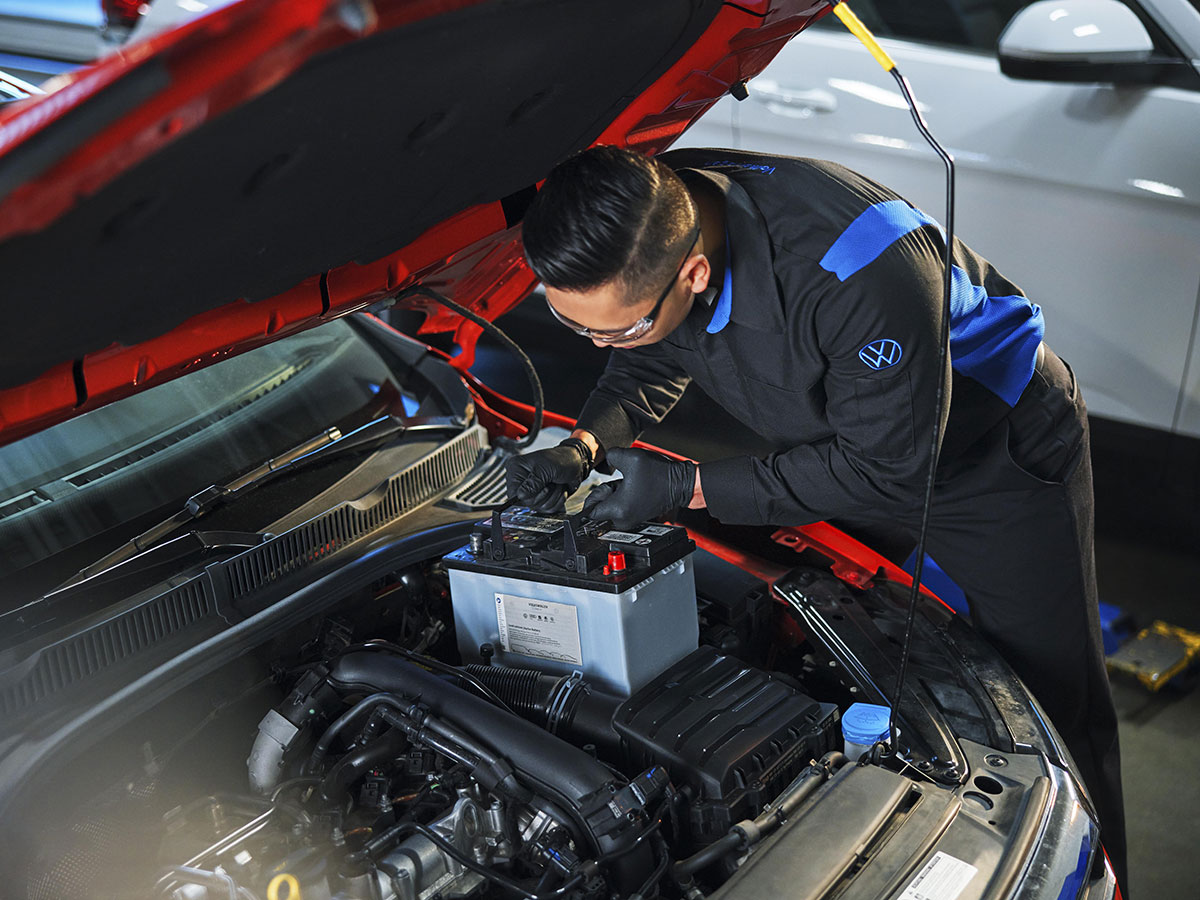
Start with the model, year, mileage and what the car is doing. A clear symptom report helps choose the correct inspection route before parts or repair work are discussed.
Describe the changeWhen, where and under what driving condition
Identify the vehicleVIN, model year, engine and fitted equipment
Keep the evidenceMessages, invoices, measurements and recent work
Symptom router
Choose the first check from what the vehicle does
Similar Volkswagen symptoms can come from different systems. The useful starting point is the condition that can be repeated, not a component name found in a search result. Bring recent repair history and say whether the concern is changing.
01
Warning messages and electrical behaviour
Send the exact dashboard text and describe what happened immediately before it. Note startup condition, battery work, rain, parked time and whether several systems showed messages together. A scan record can identify the module and condition involved, but power supply, communication, wiring and component operation still need to be tested.
02
Engine running, temperature or fluid loss
Say whether the concern occurs cold, warm, at idle or under load. Stop driving if temperature rises, oil pressure is lost, smoke is heavy or fuel is leaking. When inspection is safe, fluid level, pressure, temperature, visible leaks and running data should be checked before parts are selected.
03
Gear selection and driveline behaviour
Record whether engagement is delayed, a shift is harsh, a vibration changes with engine speed or the concern appears only after warming up. Transmission fluid condition is one part of the picture. Mounts, driveline joints, engine operation, software and related systems may also affect the symptom.
04
Steering, suspension and tyre wear
Describe pulling, wandering, knocking, heavy steering or a ride-height change. Add tyre sizes, pressures, recent impact and alignment history. Uneven wear can reflect inflation, tyre condition, alignment or worn suspension, so the inspection should connect measurements to the pattern on the vehicle.
05
Braking noise, vibration or pedal feel
State whether the concern appears during light or heavy braking, from cold or after repeated use. Pad and disc wear are measured, while fluid condition, caliper movement, hoses, wheel bearings and suspension may also need checking according to the symptom.
06
AC output, airflow or cabin control
Tell the workshop whether cooling changes at idle, one side is warmer, airflow is weak or a noise appears when the system starts. Pressure and temperature readings should be considered with fans, controls, sensors, actuators, filters and visible leaks rather than assuming refrigerant alone is responsible.
A dashboard message is useful evidence. It is not a substitute for testing the circuit, system and operating condition behind it.
History without assumptions
Build a reliable baseline when records are missing
A missing service book does not mean every fluid or component should be replaced immediately. It means the workshop must inspect present condition and clearly mark what is known, what is observed and what remains uncertain.
Start with visible leaks, fluid condition, battery state, tyres, brakes, filters, warning history and any urgent safety concern. Then create a staged maintenance plan based on the exact vehicle and reliable records. This is more useful than applying a generic package name to every Volkswagen.
Bring invoices even when they are incomplete. A part number, date or mileage can prevent repeated work and help identify what changed before a symptom appeared. If the car recently received a battery, tyres, alignment, coding or electrical accessory, mention it during intake.
For related marques and broader routing, see the German car repair page. This Volkswagen hub remains the owner for brand-specific diagnosis, maintenance and repair decisions.
Defined service routes
Move to a specialist page when the system is known
These links help the main page route intent. They are not a substitute for diagnosis when the cause remains unclear.
A transparent estimate makes the reasoning visible. It distinguishes the customer complaint from the finding, the proposed work and the method used to confirm the result.
Situation
Useful response
Owner check
A part is named by a fault code
Treat the code as a test direction. Confirm power, ground, wiring, communication, fluid or mechanical operation before deciding that the named component has failed.
Ask for the measurement or controlled test that supports the diagnosis.
Several warnings appear after a weak start
Begin with battery state, terminals, charging performance and stored low-voltage history. Multiple messages can share a power-supply event.
Do not replace several components simply because several systems reported faults.
The service history is incomplete
Inspect current fluid condition, visible leaks, filters, tyres, brakes, battery and stored data. Build a baseline without claiming that every missed item is overdue.
Separate immediate needs from maintenance that can be planned after the baseline.
The estimate changes after dismantling
Ask for photographs or measurements showing the newly exposed condition, the added part or labour and the effect on timing.
Approve the change only after the revised scope is clear.
Parts selection should use the exact vehicle identification number and production information. Ask whether seals, fasteners, fluid, programming, adaptation, alignment or calibration are included where they apply. If dismantling may reveal more work, agree how the finding will be documented and when approval will be requested.
Real ownership patterns
Tell the workshop how this Volkswagen is used
The same model can arrive with a very different history. These scenarios help frame the first appointment without inventing a diagnosis.
A daily city Volkswagen
Short journeys, frequent stops and long idling periods change the conditions in which charging, cooling and drivability concerns appear. Note whether the engine reaches operating temperature and whether the car sits unused between trips. These details guide testing but do not prove a battery, thermostat or cooling-system fault.
A motorway commuter
For a vibration, noise or temperature issue, record the speed range, road surface and whether it changes while accelerating, coasting or braking. Do not create a risky test. The workshop may need to inspect tyres, wheels, brakes, driveline and suspension before a controlled road test.
A recently purchased used vehicle
Bring the purchase inspection and every available invoice. The first visit should establish present condition, verify warning history and separate urgent defects from a catch-up maintenance plan. Missing documents should remain marked as unknown rather than replaced with assumptions.
A car returning after another workshop
Bring the previous estimate and invoice. Say whether the original symptom changed, disappeared briefly or remained the same. A replaced part is part of the history, not proof that the cause was confirmed. Preserving fault data and the timeline prevents repeated guesswork.
A Volkswagen with modified wheels or accessories
List wheel and tyre sizes, suspension changes, audio equipment, alarms, cameras or coding. The modification may be unrelated, but it can affect power use, geometry, component access or vehicle configuration. Accurate intake information saves time.
A vehicle parked for long periods
Record parked duration, jump-start history, battery age and any equipment that stays powered. A battery test should be considered with charging output and current draw. Replacing the battery without understanding the parked condition may leave the original cause unresolved.
Owner questions
What to know before booking
Clear boundaries make the visit easier to approve and easier to verify later.
Can a scan tell me exactly what to replace?
No. It reports conditions detected by the vehicle. The result must be connected to voltage, wiring, fluid, pressure, temperature, mechanical checks or component operation before a repair is approved.
What information helps with a parts check?
Send the VIN, model year, engine, transmission and any relevant option or modification. Similar Volkswagen model names can use different parts and procedures across production dates.
Should I keep driving with a warning light?
That depends on the warning and vehicle behaviour. Stop and call if oil pressure is lost, temperature rises, smoke is heavy, fuel leaks or braking or steering control changes. A message alone cannot confirm safety remotely.
What should the final invoice contain?
Keep the complaint, finding, approved work, part description, mileage and verification result. Save alignment, diagnostic or battery records when they were part of the job.
At collection, return to the original complaint. Ask how it was reproduced before repair and how the workshop checked the result. Review the dashboard and work area, then save the invoice, part description and any diagnostic or alignment record. If a warning returns, note time, mileage and driving condition instead of repeatedly clearing it.
Before and after the repair
Use the same condition to judge the result
A repair is easier to verify when the original complaint is specific. “The car feels wrong” cannot be repeated as reliably as “a vibration begins between these speeds while accelerating after the vehicle warms up.” The intake note should preserve the owner’s description before the workshop translates it into a test plan.
Confirmation does not always happen with one stationary check. A cold-start concern may need the vehicle to sit. A driveline vibration may need a controlled road test after tyres and obvious damage are inspected. A leak may need cleaning and a later recheck. Ask what condition the workshop used and whether anything still needs monitoring.
The estimate and invoice should connect this sequence. The estimate explains the evidence and proposed work; the invoice records what was actually fitted or repaired. If those documents use only a package name, ask for the specification, part description and relevant measurements. Future service decisions depend on those details, especially when ownership changes or the vehicle later visits another workshop.
01
Preserve the original evidence
Photograph the complete dashboard message and any visible leak or damage. Record the date, mileage, outside temperature and whether the engine was cold or warm. Keep previous invoices and avoid repeatedly clearing fault history when the vehicle is safe to leave unchanged. This gives the technician a timeline rather than disconnected clues.
02
Approve work in clear categories
Confirmed faults, due maintenance and observations for later monitoring should appear separately. This allows an urgent repair to proceed without turning every advisory item into part of the same problem. When a scope changes, ask for the new finding, added part or labour and the effect on price and timing before approval.
03
Check the handover, not only the invoice total
Review the dashboard, the area where work was completed and any settings affected by battery disconnection or programming. Ask for the part description and the measurement or test used to confirm the result. If a return check is required, write down the mileage, temperature or driving condition instead of relying on memory.
04
Report a returning symptom precisely
A returning warning does not automatically prove that the same part or repair has failed. Note whether the behaviour is identical, weaker, stronger or present under a new condition. Contact the workshop with the new evidence and the mileage since collection. That comparison helps separate an unresolved complaint from a different fault that uses similar language.
05
Keep maintenance separate from diagnosis
Routine service can be sensible during the same visit, but it should not be presented as the explanation for an unrelated warning without evidence. Ask which item is due by history, which condition was measured and which work directly addresses the complaint. The separation makes later records far easier to understand.
Book Volkswagen repair
Send the vehicle details and the main concern
We will confirm the appropriate starting appointment and what information to bring.
Choose the service that matches the problem with your car. If you are not sure what is wrong, start with an inspection or call us and describe the symptoms.