Independent workshop · Al Quoz 4, Dubai
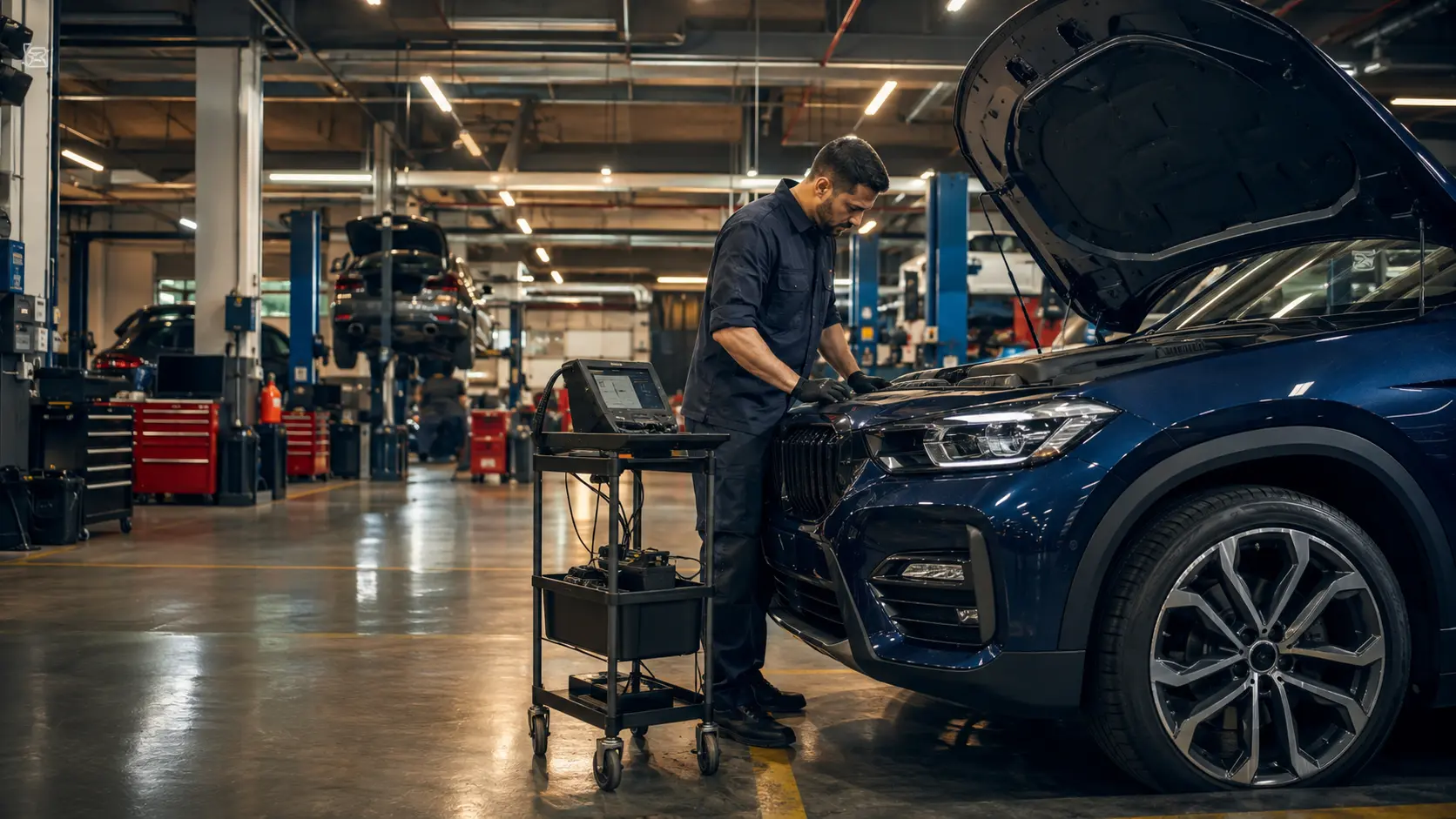
Car workshop in Al Quoz 4, Dubai
Book Auto Repair UAE for diagnostics, maintenance, mechanical repairs and bodywork in Al Quoz 4, Dubai. Start with a free inspection and review the findings before approving repairs. We also offer mobile car checkups using our van, plus free pickup and delivery.
00
Workshop flow
How your workshop visit works
Tell us what the car is doing or which service it needs. We inspect the relevant systems, explain the findings and provide an estimate before repairs begin.
Start with the vehicle model and a short description of the service, warning, noise, leak or driving change.
Inspect the relevant system and use measurements, tests or fault data to narrow the cause.
Separate confirmed work from optional recommendations, then agree parts direction and cost.
Recheck the original symptom, warning state, fluid level or road behavior before handover.
To get started: send the vehicle model and the service or symptom. We may request the VIN, mileage or a photo later when needed for diagnosis or parts matching.
01
When to book
When to book an inspection
A workshop visit is appropriate when a warning, noise or performance change cannot be resolved safely through a simple visual check. Tell us when it happens; cold start, braking, turning, accelerating, idling or after the car warms up.
For noises, leaks, overheating, vibration or symptoms involving several vehicle systems, use our mechanical car repair in Dubai guide to prepare for inspection and compare the main repair routes.
Warning lights
Engine, transmission, ABS, airbag, battery or temperature warnings need system-specific checks rather than assumptions.
Inspection and diagnosticsNew noises or vibration
Record when the noise or vibration appears and whether speed, steering, braking or engine load changes it.
Vibration diagnosisLeaks or overheating
Do not continue driving if temperature or fluid loss suggests the car may be unsafe or further damage could occur.
Engine repairBraking or steering changes
Pulling, a soft brake pedal, grinding, steering play or sudden heaviness should be assessed promptly.
Brake repairRough or delayed shifting
Describe the gear, speed and temperature when the hesitation, slipping, jolt or noise occurs.
Transmission repairScheduled maintenance
Share the mileage and service history so the required tasks can be separated from optional recommendations.
Car service detailsEstimate clarity
Estimated workshop prices and your repair quote
A useful budget starts with the service your car actually needs. These estimated UAE price ranges cover common workshop jobs; the free inspection helps distinguish routine maintenance from a fault that needs repair.
| Service and unit | Estimated AED | Scope and price factors |
|---|---|---|
| Initial inspection | 0 (free) | Repair work, parts and any separately agreed advanced testing are quoted after the inspection. |
| Routine oil service | 275 to 425 | Per service for common models; oil specification, quantity and filter requirements change the quote. |
| Coolant flush | 225 to 375 | Per routine fluid service; leak repairs and failed cooling components are separate. |
| Brake-pad replacement | 350 to 750 | Per axle on standard vehicles. Discs, sensors and caliper repairs are separate; luxury systems can cost more. |
| Control-arm, bushing or conventional strut repair | 1,000 to 3,400 | Per defined repair scope, depending on the affected parts and quantity; not a complete suspension overhaul. |
| Automatic transmission fluid service | 1,000 to 1,750 | Per applicable gearbox service, for the stated repair scope; fluid, filter and pan requirements vary. |
Why the price can change: The price varies with the service or issue, make, model, engine, parts specification, labor access and any related damage. A coolant service does not include fixing a leak, and a transmission fluid service is not a gearbox repair.
Workshop price note: These are estimated Auto Repair UAE prices for the listed jobs. After the free initial inspection, your written quote confirms the exact service or repair, vehicle specification, parts, labor, fluids, VAT and any additional work before approval. A more complex fault can fall outside the indicated range.
Ask which finding is confirmed, what part or procedure addresses it and how the result will be verified. If dismantling is required before the full scope is visible, the estimate should explain what remains uncertain and when we will contact you before extra work.
Parts choices can change availability, warranty terms and price. Ask whether the proposed option is original-equipment, OEM-supplier or aftermarket, and request the applicable coverage in writing. No one label is automatically correct for every vehicle or repair.
When the symptom may involve more than one system, start with our general car repair service. For substantial or dismantling-led work, review major car repair.
- Confirmed finding
- What the inspection found and how it relates to the reported symptom.
- Required repair
- The work needed to address the confirmed fault or restore safe operation.
- Advisory item
- A separate condition worth monitoring or planning, without being presented as the same fault.
- Parts choice
- Specification, source category, availability and the warranty terms that apply to this job.
- Extra work
- We contact you with an updated estimate before additional work changes the agreed cost.
Price for your repair
Get a workshop estimate
Tell us the vehicle and the service or symptom. We will arrange the free inspection and explain the likely cost before repair work begins.
Diagnosis before replacement
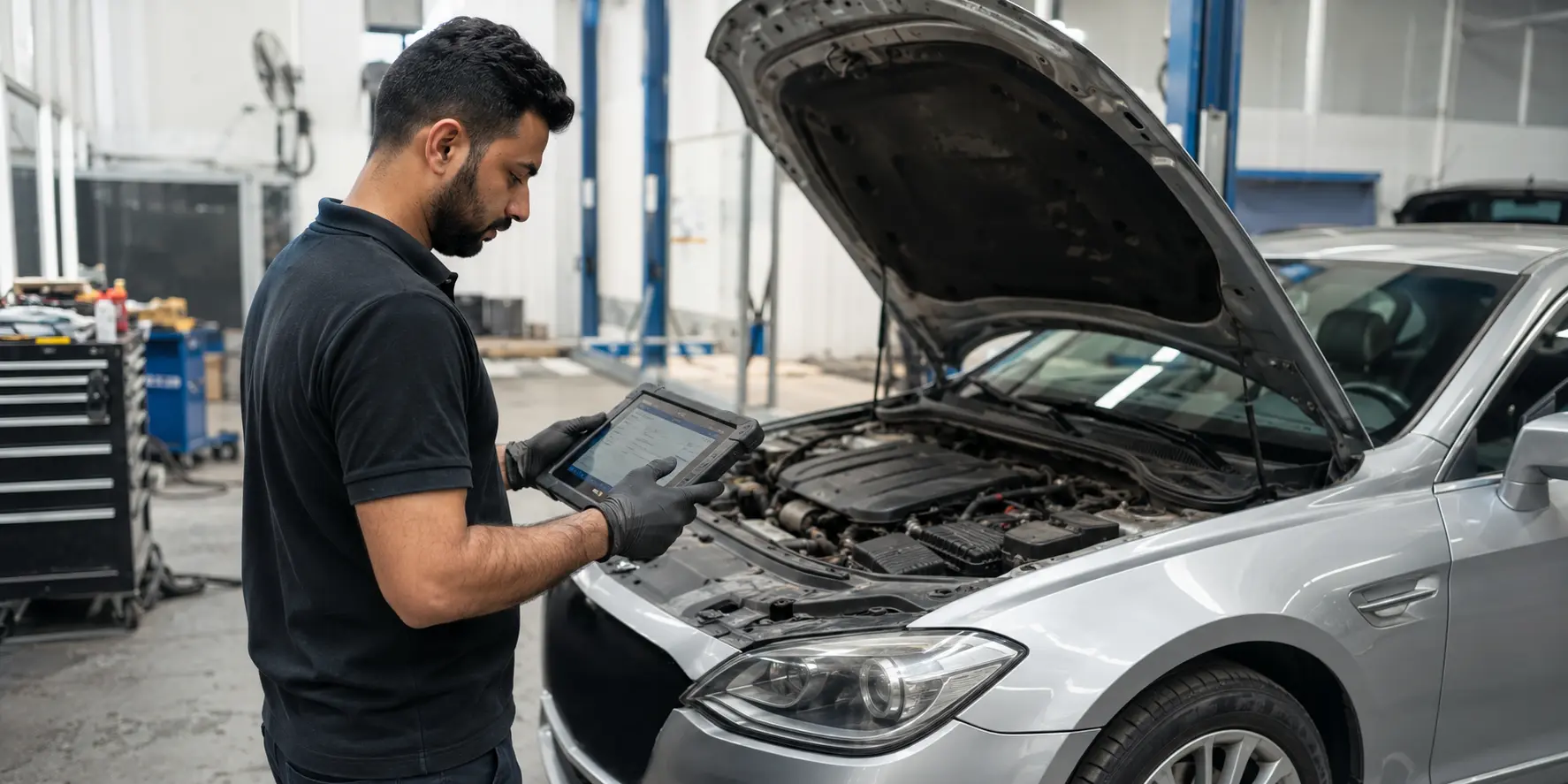
What a diagnostic scan can tell you
Diagnostic equipment can identify the system reporting a fault, but the code still needs context. Wiring, connectors, fluid condition, mechanical wear and related components may produce similar symptoms.
The useful outcome is a repair scope that explains what was found, what is proposed and what should be monitored. This reduces guesswork and lets you decide which repair to approve.
If the fault needs electronic testing, see our computer diagnostic service.
02
Workshop capabilities
Car repairs and maintenance available
Find the repair or maintenance service you need below. Each service explains what can be inspected and what to discuss before booking. If you are unsure, send us the symptoms first.
Engine
Cooling, leaks, noise, smoke, performance loss and internal faults.
Engine repairTransmission
Shift quality, fluid concerns, gearbox noise, slipping and warning messages.
Transmission repairBrakes
Pad, disc, fluid, pedal, noise and braking-performance concerns.
Brake repairSuspension
Ride quality, handling, shock absorbers, bushings and uneven stance.
Suspension repairSteering
Play, noise, stiffness, pulling, leaks and steering-system inspection.
Steering repairAir conditioning
Weak cooling, airflow, odor, leaks and compressor-related symptoms.
AC repairBattery
Starting concerns, battery testing and replacement selection.
Battery replacementTires and wheels
Tire condition, alignment, balancing, vibration and rim damage.
Tire shopBody repair
Collision damage, dents, scratches, panels and repair planning.
Car body shopPaint and protection
Refinishing, surface correction and paint-protection choices.
Painting and protectionPre-purchase checks
Structured inspection before a used-car purchase decision.
Pre-purchase inspectionAll service routes
Browse the complete service directory by symptom and repair type.
View all services03
Vehicle specialist routes
Choose the right workshop for your car
Use these hubs to find brand-specific service information, common repair routes and dedicated model coverage.
Electric cars
Workshop checks for charging concerns, battery cooling faults, power-electronics warnings and electric drivability problems.
Electric car repairLuxury cars
Repair planning for complex premium vehicles, including advanced suspension, electronics, cooling and performance systems.
Luxury car repairEuropean cars
Find workshop support for European service schedules, fault diagnosis, mechanical repair and model-specific parts choices.
European car repairGerman cars
Use dedicated workshop pages for Audi, BMW, Mercedes-Benz, Porsche, Volkswagen and related German models.
German car repairItalian cars
Compare specialist routes for Ferrari, Lamborghini, Maserati, Alfa Romeo, Fiat and other Italian vehicles.
Italian car repairBritish cars
Reach workshop guidance for Land Rover, Range Rover, Jaguar, Bentley, Rolls-Royce and other British vehicles.
British car repairJapanese cars
Choose a repair route for Toyota, Nissan, Lexus, Honda, Mazda, Mitsubishi and other Japanese cars and SUVs.
Japanese car repairAmerican cars
Find workshop coverage for Ford, Chevrolet, GMC, Cadillac, Dodge, Jeep, RAM and other American vehicles.
American car repairWhy choose our Al Quoz workshop?
Bring diagnostics, maintenance, mechanical work and body repairs to one independent workshop. Start with a free inspection, discuss the findings and compare the proposed parts and labor before approving repairs. Our repair pricing can be 65% to 70% lower than agency pricing for comparable work; your written estimate confirms the scope and final amount.
- Free inspection: describe the warning, noise or service concern so the first checks focus on your car’s needs.
- Mobile car checkup: our van supports checks at your location. Send the vehicle, symptoms and location so we can confirm the visit and suitable work.
- Free pickup and delivery: arrange collection and return with the vehicle condition and transport details confirmed first.
Review our workshop standards for inspection, approval and handover. Confirm your appointment or mobile visit before traveling, and review any additional diagnostic or dismantling work separately from the free inspection.
03
Your workshop visit
Prepare for your workshop appointment
- 01
Start with the basics
Share the vehicle model and a short description of the service or symptom. We may ask for the year, mileage, VIN, photo or video later when it helps diagnosis or parts matching.
- 02
Confirm arrival and inspection
Confirm the appointment before traveling to Al Quoz 4, Dubai. Explain any recent repair or event that may be related.
- 03
Understand the inspection findings
Ask what was tested, what failed and whether any recommendation is immediate, preventive or optional.
- 04
Authorize the agreed work
Approve the defined repair scope and estimate. If inspection reveals additional work, review it before expanding the job.
- 05
Handover and next steps
Check what was completed, what was replaced and whether a follow-up check or maintenance date is recommended.
Your repair choices
Choose which repairs to approve
A useful estimate should connect the observed fault to the proposed repair. When more than one repair is recommended, ask which item affects safety or drivability, which prevents likely damage and which can be monitored.
Use the specialist workshop routes above when you want brand-group guidance before choosing a specific repair service.
Workshop location
Visit our workshop in Al Quoz 4
Confirm the appointment and arrival instructions before traveling. If the vehicle cannot be driven safely, describe its condition first so the appropriate transport route can be discussed.
See the contact and appointment page. If the vehicle is unsafe to drive, review the car recovery service before traveling.

Common workshop jobs
These scopes explain how a quote may be structured; they are not customer testimonials or fixed offers. The vehicle specification, confirmed fault, parts choice, access and related damage determine the final written estimate.
2021 Toyota Corolla oil service
A scheduled oil service requested after the maintenance reminder, with no active leak or performance complaint.
Work included: Inspect the vehicle, replace the oil and filter to the confirmed specification, check visible fluids and leaks, check tire pressures, reset the reminder where supported and perform a final operating check.
Estimated total: AED 350. Oil quantity, specification and any additional filters due can change the quote.
2019 Nissan Patrol front brake pads
A new front brake noise inspected before replacing parts.
Work included: Check the front brakes, fit the agreed front-pad option, clean the relevant contact areas, then complete pedal and road-safety checks.
Estimated total: AED 650. Discs, sensors, seized hardware or caliper repairs are separate if inspection confirms they are required.
2018 BMW 5 Series front suspension
A front-end clunk and steering movement over uneven roads diagnosed before parts approval.
Work included: Inspect the suspension, replace the confirmed worn front control-arm components, complete the fitting work and perform final steering and road checks.
Estimated total: AED 2,400. Alignment, additional arms, damaged fasteners or adaptive-suspension faults would be quoted separately.
For a relevant estimate: Share the vehicle details and the symptom or service required. We start with the free workshop inspection, explain any paid diagnostic stage and ask for approval before repair work continues.
Before you visit
Car workshop questions
Can I book without knowing what is wrong?
Yes. Describe the symptoms and when they occur. If the failed system is not clear, the appropriate starting point is inspection and diagnostics.
What details should I send when booking?
Send the vehicle model and a short description of the service, warning or symptom. Mention any immediate safety concern. We may request the year, mileage, VIN, photo or service history later when it helps diagnosis or parts matching.
Will a scan identify every problem?
No. Scan data can identify the system reporting a fault, but physical inspection, measurements and symptom testing may still be needed to confirm the cause.
Can I approve only part of the recommended work?
Discuss which items are required for safety or drivability, which prevent further damage and which can be monitored. The agreed scope should be clear before repair begins.
Where can I compare all available workshop services?
Use the car repair services directory to compare diagnostics, mechanical repairs, maintenance and bodywork.
Book the workshop
Arrange your workshop visit
Tell us the vehicle, concern and location, then choose a workshop appointment or request our mobile checkup van. Free pickup and delivery can be arranged with the booking team. Mention any braking, steering, temperature or clearance problem before the arrival plan is agreed.