Ferrari repair Dubai
Request Ferrari repair in Dubai with a model-led intake for Purosangue, 296, Roma, SF90 and other supported vehicles. The first conversation should establish transport, ground clearance, powertrain, warning history, maintenance records and this requested operation before workshop access or parts are promised.
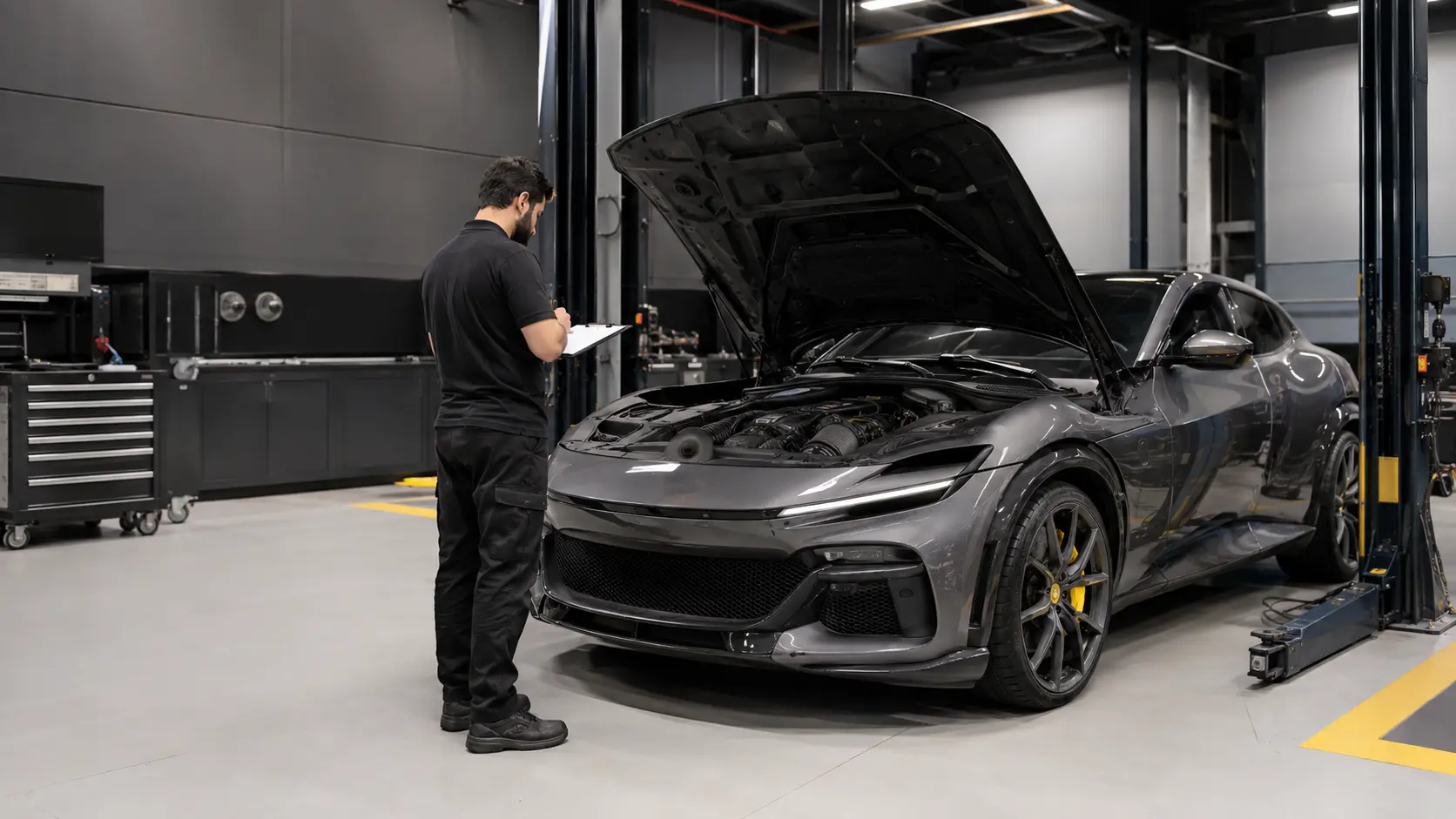
Prepare the vehicle record before it moves
A high-care visit begins with accurate information. Model name alone does not reveal ride-height equipment, wheel fitment, market specification, hybrid architecture or earlier specialist work.
Send a full exterior walk-around
Photograph wheels, tyre sidewalls, bumpers, splitters, underbody concerns and existing marks. Record ride-height position and any transport restraints used for handover.
Capture warnings without clearing
Save the first dashboard message, later messages and the driving condition. Include battery support or jump-start events because low supply can change the diagnostic picture.
State the exact requested operation
Define scheduled maintenance, leak investigation, brake concern, tyre or wheel issue, drivability symptom, AC behavior or electrical fault. Avoid asking for a general repair package.
Declare modifications and use
List exhaust, tuning, suspension, wheel, protective film, track use, storage and market changes. These details affect access, references, testing and responsibility.
Keep the car inside a real working environment
The imagery follows engine-area assessment, chassis and tyre examination, then a 12-volt systems check. It shows complete current vehicles with practical access rather than floating catalogue cut-outs.
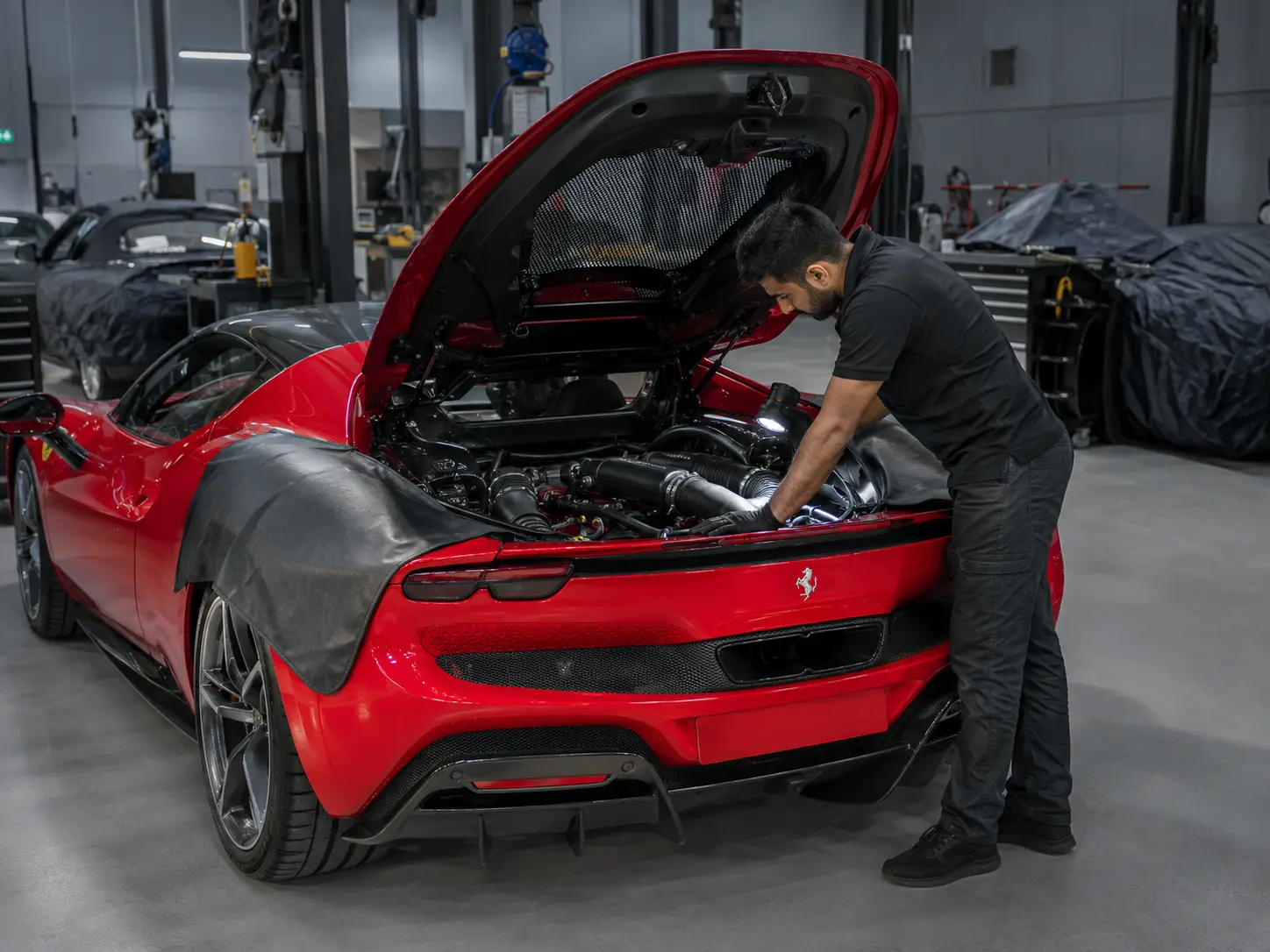
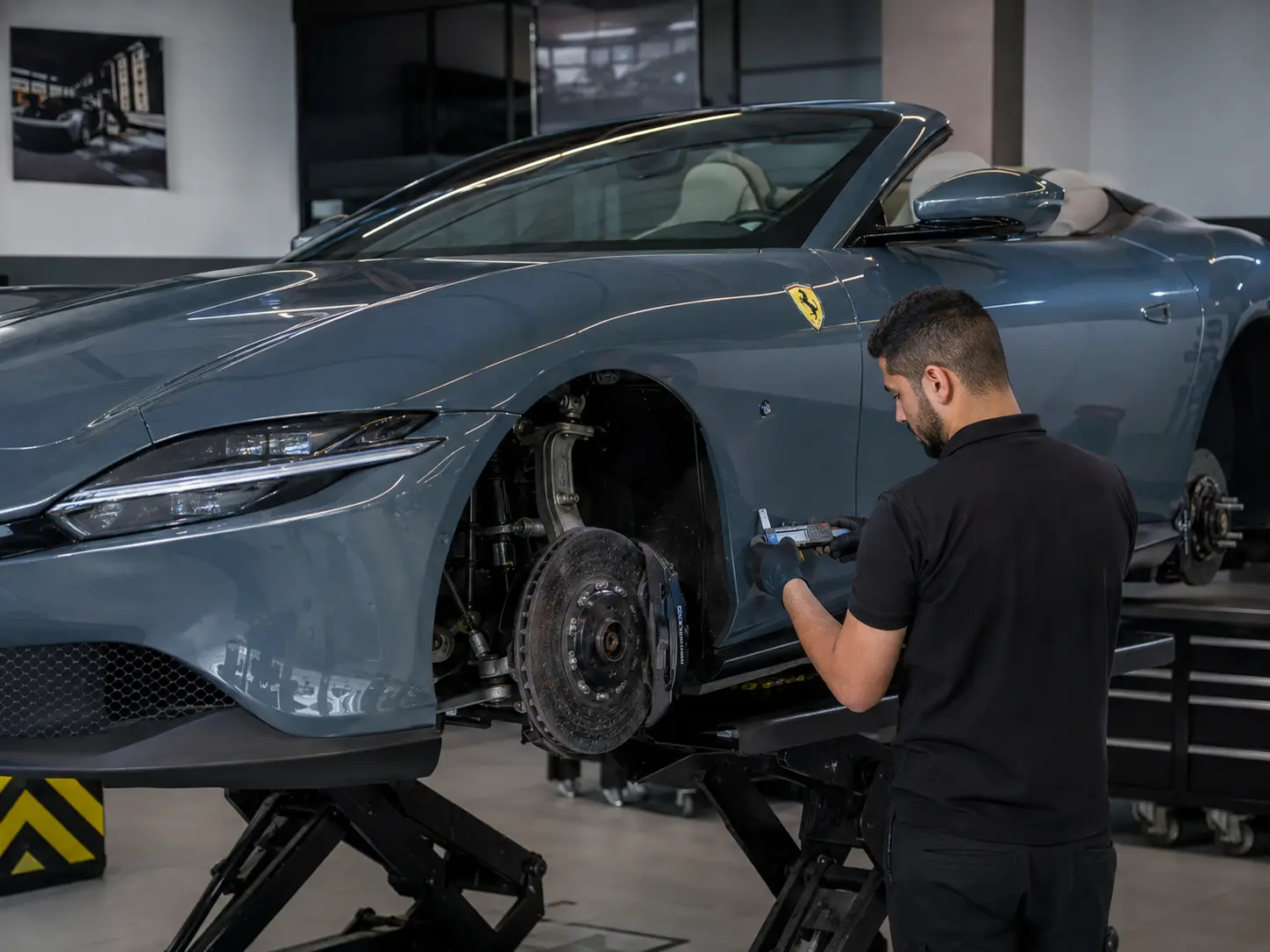
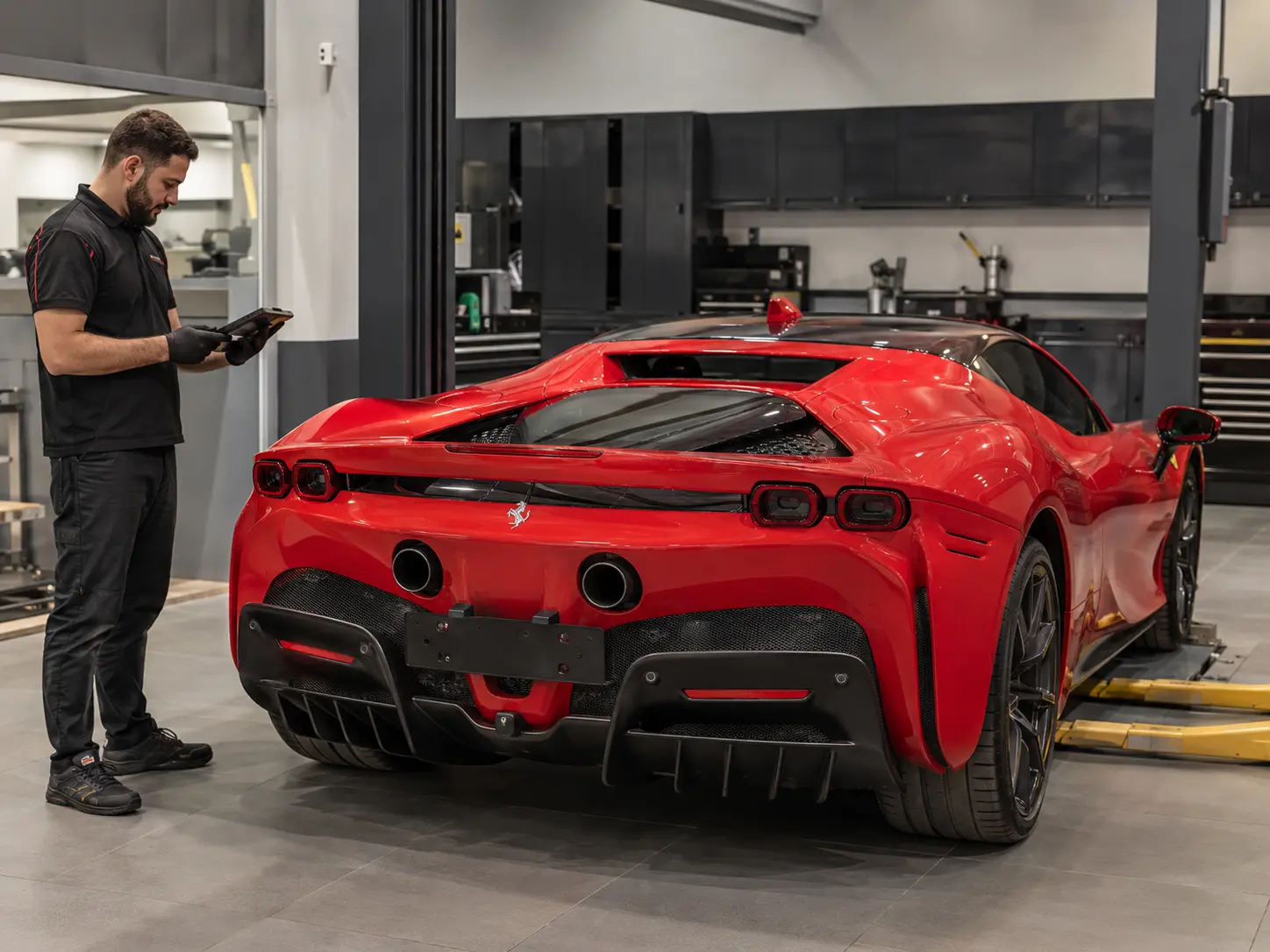
Confirm generation, equipment and propulsion
Modern Ferrari vehicles range from front-engine grand tourers and performance SUVs to mid-engine sports cars and plug-in hybrids. The VIN, model year, market, option equipment and service record should anchor every technical discussion.
Even familiar model names can span meaningful changes in software, braking, suspension, emissions and powertrain hardware. The parts desk should verify the actual chassis rather than selecting by a broad model label.
Independent service has clear limits
This page does not imply manufacturer authorization, factory warranty representation or universal Ferrari capability. Protected functions, carbon-structure work, high-voltage propulsion procedures, advanced calibration or model-specific tooling may require referral.
A competent intake says what can be inspected, what information is available and which operations need separate confirmation. Owners should receive that answer before transport or disassembly.
- PurosangueProvide wheel and tyre specification, ride setting, powertrain symptom, load use and access considerations.
- 296 GTB and GTSDistinguish combustion behavior, hybrid warning, low-voltage condition and charging concerns.
- Roma and Roma SpiderReport storage, battery support, roof or cabin function, braking and drivability observations.
- SF90 variantsIdentify charging and propulsion messages while avoiding energized-system handling without confirmed scope.
- Other Ferrari generationsSend VIN, model year, market, service documentation, modifications and the exact requested task.
Distinguish protection, diagnosis and repair
A warning light, vibration or fluid trace can involve several systems. High vehicle value makes disciplined triage more important, not less: first control movement and damage risk, then gather evidence at the least intrusive level.
An initial assessment can define the present fault path and next access step. It should not be sold as a guarantee that concealed damage, software restrictions or special-order dependencies are already known.
- Warning appears after storage
- Provide battery-support history, parking duration, starting behavior and every message in order. Supply condition can influence modules, but persistent faults still need system-specific confirmation after voltage is stabilized.
- Fluid trace appears beneath the car
- Do not infer the fluid from color alone. Photograph location and quantity, note odors and warning messages, and avoid driving when lubrication, braking, cooling or fuel integrity could be affected.
- Brake feel or vibration changes
- Record speed, pedal pressure, temperature, steering feedback and recent wheel work. Interpret tyres, wheel fastening, discs, pads, hubs, bearings and suspension as one connected evidence set.
- Engine response becomes inconsistent
- State mode, temperature, fuel event, warning, sound and whether the condition is repeatable. Air, fuel, ignition, exhaust, cooling, control and mechanical possibilities require ordered evidence.
- Ride height or steering looks abnormal
- Stop before a low component contacts the ground. Note selected settings, affected corner, parking duration and impact history. Tyre, wheel, sensor, hydraulic or mechanical causes should remain separate.
- Hybrid message or charging issue occurs
- Do not handle orange cabling or attempt improvised charging. Preserve the message and state connector, supply, temperature and operating context so capability can be reviewed safely.
Require a finding before an expensive component
The written record should connect the owner’s observation to the inspected condition and show what will be verified after approved work.
| Owner observation | Evidence to preserve | Scope question |
|---|---|---|
| Warnings after a long park | Battery state, support history, charging result, code chronology, low-voltage connections and returning events. | Which messages remain after stable supply and why? |
| Oil or coolant trace | Fluid identification, source location, cleaned-area recheck, level, pressure or temperature evidence and access notes. | Is the repair limited to the confirmed source and affected materials? |
| Vibration during braking | Tyre and wheel condition, runout where relevant, disc and pad state, hub surfaces, bearings and joints. | What measurement separates braking hardware from wheel or chassis causes? |
| Power loss in one mode | Repeatable operating condition, saved faults, live data, intake and fuel evidence, thermal state and mechanical checks. | Which result supports the proposed part or further access? |
| Vehicle sits low after parking | Ride-height comparison, time, leakage behavior, command response, sensor values and visible hardware. | Is the suspected cause hydraulic, pneumatic, electrical or structural? |
| Hybrid or charging warning | Exact message, connector and external-supply context, low-voltage state and non-invasive fault information. | Does the workshop have confirmed scope for the next voltage-system operation? |
Treat condition control as part of the service
Careful ownership means protecting bodywork and mechanical systems while preserving evidence. Cosmetic presentation should never hide an unresolved safety, temperature, voltage or fluid concern.
Agree the handover record
Create photographs concerning body panels, wheels, glass, cabin warnings and mileage at collection or delivery. Record keys, accessories and removable equipment.
The same record supports transparent custody and helps both parties distinguish existing condition from workshop activity.
Use suitable battery support
Long storage can reduce low-voltage reserve and create difficult starts or resets. Consult the vehicle instructions, choosing compatible equipment and its approved connection points.
Tell the technician about every flat-battery or booster event; do not erase this history because the car starts normally today.
Protect tyres and wheels
Check pressures, age, specification and sidewall condition. Low-profile damage may be significant even when the wheel still holds air.
After impact, request tyre and wheel inspection before alignment or suspension electronics are blamed.
Record fluids precisely
Keep dates, mileage, specifications and quantities for oil, coolant, brake fluid and transmission-related service. A generic fluid description is not enough for later traceability.
If a leak appears, avoid repeated top-ups without recording volume and identifying the loss path.
Plan disassembly boundaries
Before panels, undertrays or tightly packaged systems are opened, confirm the initial access scope and how newly visible damage will be reported.
Ask how clips, fasteners, protection films and delicate finishes are handled, and whether replacements are available.
Verify in the original condition
A post-repair check should address the symptom at comparable temperature, road load, mode or parking duration where practical. Static inspection may be insufficient for an intermittent complaint.
Keep measurements, scan records and part references with the invoice for future maintenance continuity.
Link only to the system that owns the concern
The brand page coordinates a high-care intake. Specialist service pages provide deeper information once the symptom has a primary system and the required capability is confirmed.
Diagnostic baseline
Use inspection and computer data to preserve faults, evaluate condition and determine the least intrusive next step. Codes alone are not a parts authorization.
Open the evidence reviewEngine and thermal path
Route smoke, leakage, overheating, unusual sound or drivability concerns through physical and measured engine evidence before deeper work.
Explore engine repairBraking inspection
Changed pedal feel, noise, vibration or warning messages require tyres, wheels, braking surfaces, hydraulics and chassis context.
Open brake repairSuspension assessment
Ride-height differences, knocks, impact history and uneven wear need hardware inspection before alignment becomes the recommendation.
See suspension repairAC performance
Vent temperature, airflow, leakage, heat rejection and control behavior should identify whether the request is cooling capacity or distribution.
View AC repairProtected booking
Send clearance, movement and custody requirements with the vehicle history. Confirm whether road arrival, covered transport or another plan is appropriate.
Request a workshop reviewControl each transition and approval
The process protects the car and keeps specialized boundaries visible from arrival through final handover.
- 01
Review dossier and access
Confirm identity, requested operation, clearance, transport, existing condition, modifications and warning history.
- 02
Establish non-invasive evidence
Inspect, preserve data and perform approved measurements before opening tightly packaged or protected areas.
- 03
Authorize a defined operation
Agree parts basis, labour, access risk, timing, tax, setup and escalation for any concealed findings.
- 04
Recheck and document custody
Verify the initial symptom, record completed work and repeat the handover condition review with the owner.
Put capability and limits in writing
Confirm the specific finding, test evidence, proposed part source, access method, setup or calibration, consumables, labour, tax and the final verification. Ask whether removed parts can be retained or viewed and how additional findings will be approved.
No claim of Ferrari authorization, universal model coverage, fixed turnaround or broad warranty should be inferred. Availability and written terms depend on the exact chassis, component and independently supplied service.
If transport, storage or an extended observation period is needed, define custody, keys, battery support, indoor positioning and communication checkpoints. The owner should know whether the vehicle will remain static, undergo a controlled road check or wait for an external specialist before approving that stage.
Where paint-protection film, carbon trim, ceramic finishes or delicate wheel surfaces surround the work area, record their existing condition and the agreed protection method. Cosmetic precautions belong alongside mechanical access planning, while any unavoidable risk should be disclosed before parts are removed.
Set expectations before transport
The following answers describe an independent intake. A vehicle-specific capability decision follows review of the requested task.
Is this a Ferrari-authorized workshop?
This independent garage makes no manufacturer-authorization claim. This independent assessment accepts work only after the requested procedure and capability are matched.
How should a low-clearance Ferrari arrive?
Share clearance, ride-height, tyre and steering condition first. The advisor can confirm whether road arrival or suitable transport is safer.
Can you work on Ferrari hybrid systems?
Low-voltage and general inspection scope is separate from energized high-voltage work. Capability must be confirmed for each requested procedure.
What records should accompany the car?
Send VIN, model year, market, mileage, service invoices, warning photographs, battery events, modifications and earlier diagnostic findings.
Can a warning after storage be only the battery?
Low supply can influence many systems, but returning warnings still require relevant diagnosis after voltage is stabilized.
Do you assess Ferrari brake vibration?
An assessment can compare tyres, wheels, braking hardware, hubs, bearings and suspension before a repair scope is proposed.
May I provide Ferrari parts?
Ask before purchase. Exact reference, authenticity or quality, condition, fitment responsibility plus written labour terms must be agreed.
Which details belong in the custody documentation?
A walk-around with photographs, mileage, warnings, keys and visible marks should be agreed at handover and reviewed at collection.
Request a Ferrari workshop review
Send the VIN or exact model, requested work, ground-clearance details, current warnings, service record and existing condition photographs. The team can then confirm movement, capability and the appropriate initial assessment.