Independent workshop in Al Quoz 4
Mechanical Car Repair in Dubai
A new noise, fluid leak, vibration or change in braking can have more than one cause. We inspect the affected system, explain the repair choices and give you a written estimate before work begins.
Brake-pad replacement is estimated at AED 350–850 per axle. Other mechanical costs depend on the confirmed fault; see the price table below. The initial workshop inspection is free.
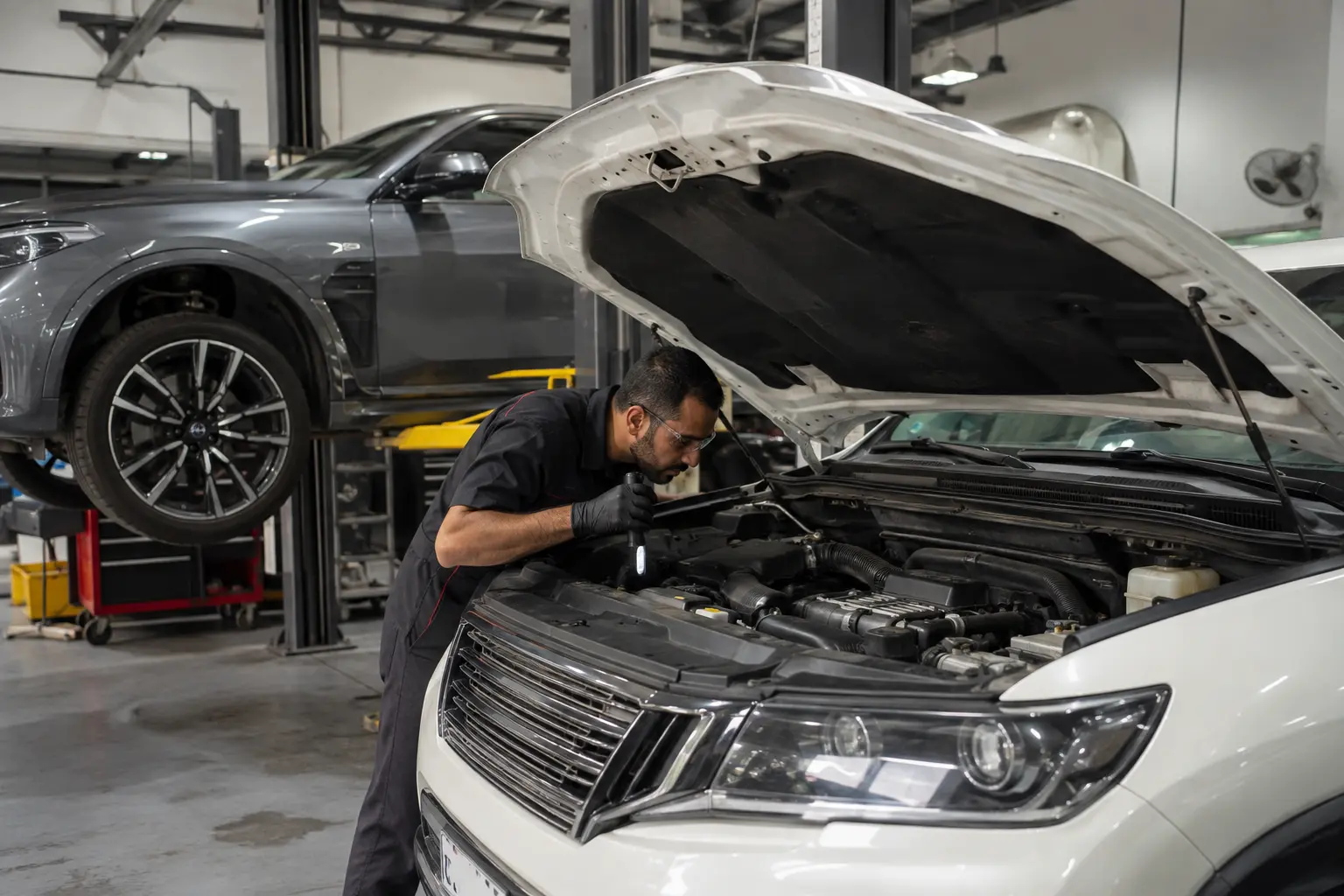
Prices for common mechanical jobs
Mechanical repair prices in Dubai
Brake-pad replacement is estimated at AED 350–850 per axle; a defined suspension repair at AED 950–3,230. A clutch, gearbox or engine job costs more because the parts and access differ. The ranges below exclude 5% VAT for the work described and are planning estimates, not fixed offers.
| Service | Estimated price | What the estimate covers |
|---|---|---|
| Initial workshop inspection | Free | First condition check and discussion. Advanced testing or dismantling is quoted before it starts. |
| Brake-pad replacement | AED 350–850 per axle | Pads and fitting for a standard vehicle; discs, sensors and caliper repairs are separate. |
| Control arm, bushing or conventional strut repair | AED 950–3,230 per job | A defined repair using the parts listed in the quote, not a complete suspension overhaul. Alignment is confirmed separately. |
| Manual clutch replacement | AED 1,710–4,000 per job | Clutch work on a compatible manual car; flywheel or hydraulic faults can change the total. |
| Automatic gearbox valve-body repair | AED 2,090–4,090 per job | Targeted work after the valve-body fault is confirmed. Fluid, coding and internal damage are stated separately when applicable. |
| Head-gasket repair | AED 4,280–10,950 per job | Confirmed gasket repair; machining, engine access and damage from overheating affect the estimate. |
Vehicle model, number of parts, labor access and related damage can move the final price outside a range. Your written quote identifies the parts, quantities, labor, required fluids, testing and VAT-inclusive total. Extra work needs a revised estimate and your approval.
Find the right mechanical service
Repairs we can assess
Tell us what changed. A vibration may begin in a tire, mount, transmission or driveline; a warning light alone does not identify a failed part. We check the likely cause before recommending work. If the problem is already known, the service pages below explain the relevant repairs in more detail.
Engine and cooling
Rough running, smoke, loss of power, fluid leaks or overheating. A rising temperature or oil-pressure warning changes whether the car should be driven.
Engine repairTransmission and driveline
Delayed shifts, slipping, harsh engagement or a car that will not move. Fluid service and internal repair are priced as different jobs.
Transmission repairBrakes
Grinding, pedal changes, pulling or vibration when braking. We check friction parts and hydraulic operation before selecting pads, discs or other repairs.
Brake repairSteering
Stiffness, play, fluid loss or a sudden change in response. Tire and suspension condition can matter as much as the steering parts.
Steering repairSuspension
Knocks, uneven height, poor control or abnormal tire wear. We check the worn part and whether an alignment is needed after repair.
Suspension repairFault diagnosis
Several symptoms or a warning without an obvious cause may need a scan plus physical checks and measurements. A code alone is not a parts order.
Computer diagnosticsA useful description is enough
When does the problem happen?
A noise on the first start can point to different checks from a noise that appears only once the engine is warm. A shake at road speed may involve wheels or the driveline, while vibration only when braking calls for a different inspection. Describe the moment it happens, not the part you think has failed.
If the concern comes and goes, note whether it follows an overnight stop, acceleration, a hill, steering input or a recent repair. A dashboard photo or short video can help when safely available. You can contact us with only the model and a brief description; detailed history can follow if needed.
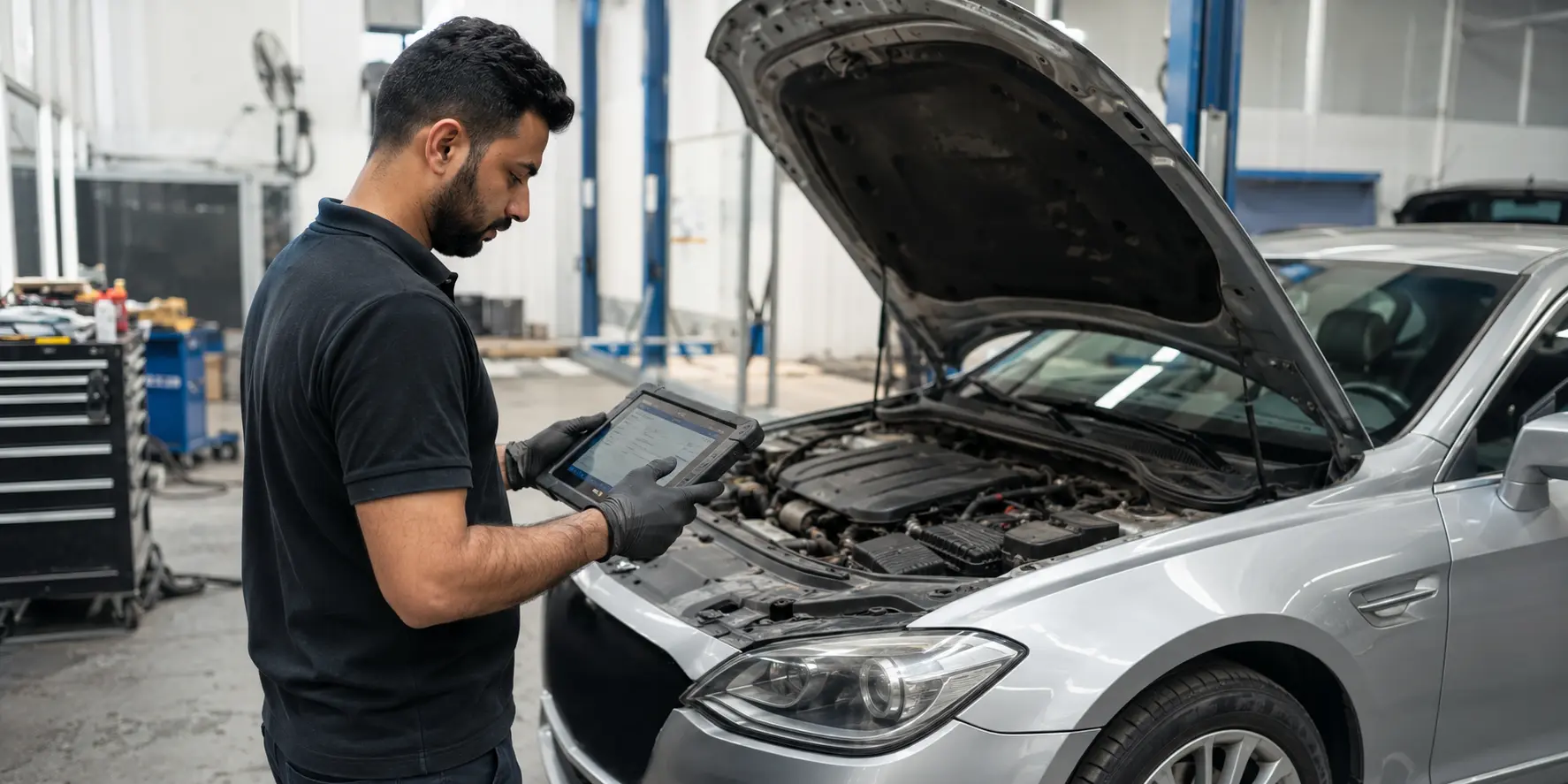
Test before replacing parts
How we identify the fault
We begin with the complaint, fluid levels, visible wear and the car’s service history. Depending on the symptom, the technician may inspect the vehicle on a lift, check a leak or pressure, read fault data, measure play, or test the car under controlled conditions. A fault code identifies an operating condition or circuit; it does not always prove which component failed.
The free initial workshop inspection helps choose the next step. More invasive testing, dismantling or specialist procedures are explained and priced before they are added. If the symptom cannot be reproduced, we tell you what was checked and what remains uncertain rather than fitting a part on a guess.
After the cause is clearer, you receive a written recommendation. We separate the repair that addresses your complaint from routine maintenance and other wear found during inspection.
Safe arrival comes first
When the car should not be driven
Stop safely and call if braking or steering control has changed, a tire or wheel is unstable, the engine overheats, oil pressure is lost, or a major fluid leak is visible. Continued driving can turn a limited fault into more extensive damage. Do not open a hot cooling system or try to recreate a severe symptom for a video.
Water from normal air-conditioning drainage can resemble a leak. Coolant, oil, transmission fluid and brake fluid need different checks. Tell us where the fluid appears and whether a warning is on, and we can advise whether a workshop visit or recovery is appropriate.
Understand the complete job
Repair choices and final checks
The written estimate names the fault, parts condition, labor, fluids and any tests or calibration needed after fitting. We explain a suitable genuine, original-equipment, aftermarket, remanufactured or inspected used part when relevant and available. The cheapest part alone may leave out seals, fasteners, fluids or labor that the repair needs.
A worn component may be the cause of a symptom, a consequence of another fault, or an unrelated maintenance item. We make those distinctions before work begins. For example, replacing a mount may address movement without resolving an engine misfire, while a leaking cooling component may call for checks for overheating damage. If dismantling reveals another problem, we discuss the finding and revised cost before expanding the job.
Completion checks match the repair. A leak may need a pressure check; brakes need pedal and operating checks; a suspension job may need alignment; and a transmission repair can require fluid-level setting or adaptation. We explain what was done at handover and any follow-up that applies. For a large engine or multi-system job, see our major car repair guide for staged approval and cost planning.

Before booking
Mechanical repair questions
How much does mechanical car repair cost in Dubai?
Brake-pad replacement is estimated at AED 350–850 per axle and a defined suspension repair at AED 950–3,230. A clutch, gearbox or engine repair can cost more. The price table gives other examples. These planning ranges exclude 5% VAT for the listed work; the final quote follows inspection.
Is the first workshop inspection free?
Yes. The initial condition check at our Al Quoz 4 workshop is free. If the fault needs advanced testing or dismantling, we explain the additional charge before that work begins.
Do I need to identify the failed part?
No. Tell us the car model, what changed and when it happens. We can select the first checks and ask for more detail if it helps parts matching or diagnosis.
Can a fault code tell you which part to replace?
Not by itself. A code can identify a circuit or operating condition. Physical checks, measurements and the circumstances of the fault may be needed before a part is ordered.
Should I drive with an overheating engine or weak brakes?
No. Stop safely and call for advice. Driving with changed braking or steering, overheating, lost oil pressure or a major leak can be unsafe and can worsen the damage.
Can the price change after the first estimate?
It can if testing or dismantling reveals additional damage. We explain the finding, parts choice and revised cost for approval before adding the work. Routine service is priced separately from the fault you reported.
What if the fault is intermittent?
Tell us when it appears, such as at first start, once hot, during braking or under acceleration. A safely recorded photo or short video may help. If the problem does not appear during inspection, we explain what was checked and the next sensible step.
Book mechanical repair
Tell us what your car is doing
Call with your model and a short description of the noise, leak, warning or driving change. We can arrange a free workshop inspection, pickup and delivery, or discuss recovery when the car should not be driven. A written estimate comes before repair work.